India 6-1 · A Day in Delhi
The Shower Room and the Metro
I woke at 7:40 and struggled through a shower in a damp, badly kept shower room.
The lever was very worn and there was rubbish lying about, and whether the water was hard, it stayed slippery however much I washed, which was hard going.
When I checked out I was told again that there was an Akshardham tour and that it was free, so I should come.
The people here are so easygoing and kind that I wanted to join, but it was impossible today given my schedule.
Mattresses had been put out in the common area too, with people sprawled asleep or on their phones, and I perched there and called an Uber.
I tried for more than twenty minutes and could not get one.
In the end I just left at nine.
It was time to get moving one way or another.
I decided to take the metro and went out, but the data still barely worked and it was driving me mad.
The Girl Who Helped

There was a metro right nearby, so I walked that way at least.
It was an elevated metro, so I went up to the second floor.
I went up thinking there would be a day pass, but the man at the counter spoke no English, which was a problem.
On top of that it was brutally crowded, with people pushing in, and queueing made it feel like there was no time.
The man at the counter explained in broken English that I could buy a ticket at a counter further in.
He was unfriendly.
Here they check bags even to take the metro.
I went through the bag check and was queueing to speak to the man at the counter inside.
Suddenly someone tapped me from behind, and turning round it was a very short woman.
She was about 150 cm, wearing glasses, probably somewhere between twenty and twenty-five.
Her English was far better than mine, and she asked me various things, saying she would help.
I said I was going toward the Red Fort.
Buying the ticket, the counter treated her unkindly, but she was sharp and in the end got me a foreigners' ticket.
I am not sure it was foreigners-only, but that seemed to be the gist of how the ticket was bought.
The ticket came to 30 rupees.
I paid with a Travel Wallet card.
Even after the ticket was bought I had an urge to lean on this person 20 cm shorter than me, like a child trailing after its mother in an unfamiliar place.
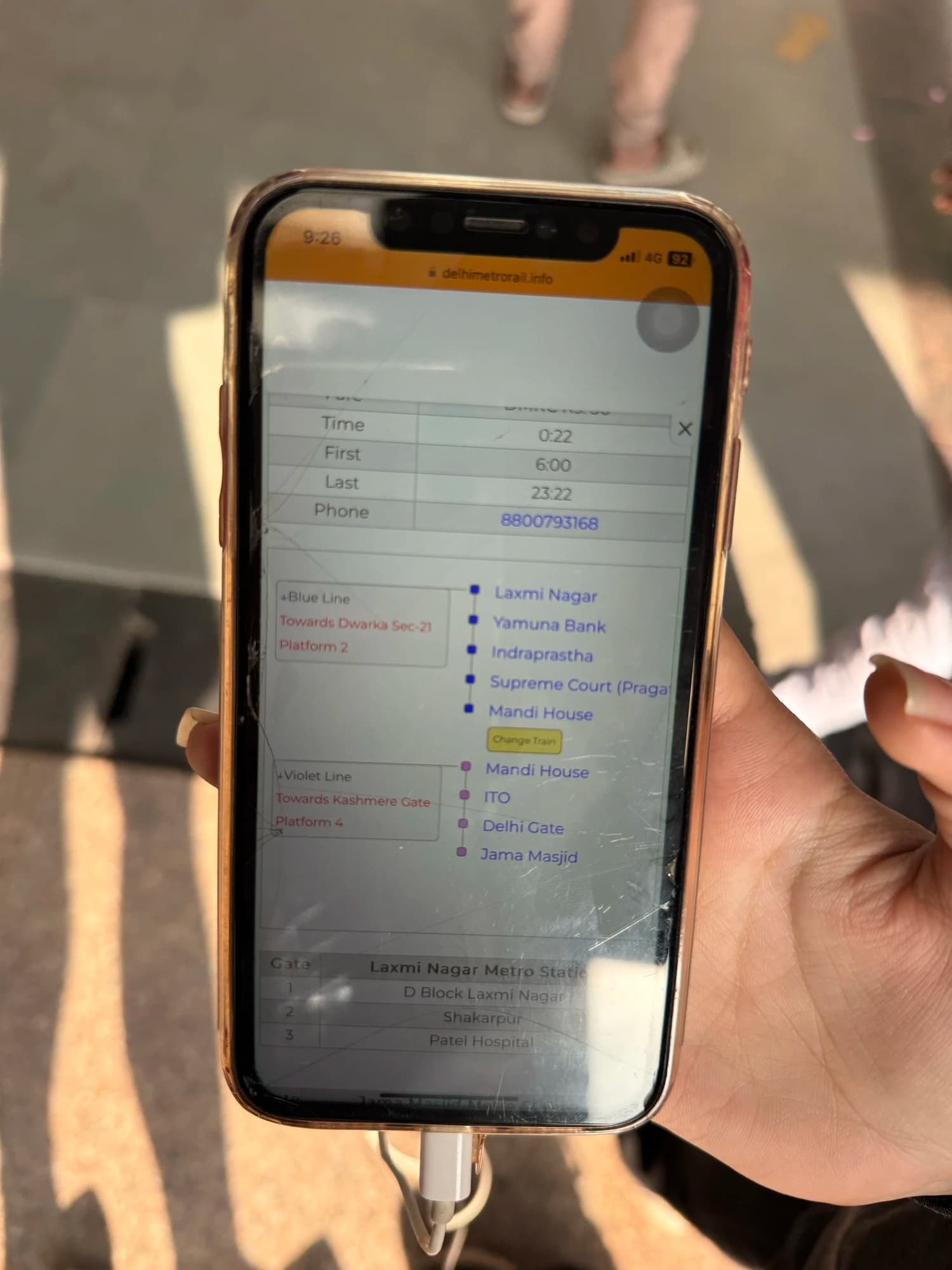
Before that she had already pulled up the metro map on her phone and explained in detail how to get there.
Even so I wanted to depend on her for where to board and when.
At the time I had no awareness of why that urge was there, but looking back now I think I was behaving exactly like a child.
On the Metro
The metro platform was one floor further up, on the third.
Riding the escalator up, she asked how my travels in India had been so far.
Perhaps worn down by the unfriendliness of the counter staff, her tone was embarrassed at India being so full of complicated, outdated things.
I said I simply liked it, especially the buildings.
Saying negative things is not my style.
If I had told a local only the drawbacks, I would have looked like someone pouring out complaints despite having chosen to travel all this way.
There are lines on the platform marking where to queue for the doors, and she waited with me on my side.
And she stayed with me right up until the metro arrived, then left.
I was so grateful I wanted to buy her at least a drink, but she simply left before there was a chance.
There was nowhere much to buy a drink anyway, but that was how I felt.
There are unfriendly people like the metro staff, and there are kind people like this.
Meeting a heap of poor-quality people and then one person who feels like a benefactor makes me feel lucky.
At any rate, I was grateful to her.
Just before the metro arrived, men drenched in sweat crowded in, pushing, and it was chaos.
Once on board it was so packed we were compressed together, and a stench worse than anything I had met so far came off it.
It is not just that breathing is hard; it is a stench that makes you not want to breathe.
A few stops on the crowd thinned mercifully and I could breathe again.
The view through the window was full of smog and full of rubbish, and I did not much want to rest my eyes on it.
I was simply busy watching my phone and the display inside the metro showing which station was next.
I knew I would not get to everywhere on today's plan, so I was also working out in my head how to rearrange the route.
Redrawing the Route
I gave up on Akshardham, taking it for granted I could not go today.
Bukhara and Indian Accent are restaurants to the south and I had already booked, so I would definitely go.
Agrasen ki Baoli and India Gate were toward the centre.
The Red Fort and Jama Masjid were right up at the top, and going there would make lunch at Bukhara too tight.
I decided boldly to leave the north for if time allowed, and set off.
Because after Bukhara I planned to get to Qutub Minar, the Lotus Temple and Humayun's Tomb before dinner.
So I took the Blue Line and got off first at a place called Mandi House.
On the way out I could not find the exit and fumbled about, wasting about five minutes.
As always it was very hot and humid and thick with smog, so I walked with a mask on.
First I headed for Agrasen ki Baoli.
On this trip I had wanted to fit in Chand Baori, famous as a huge stepwell, but it was too far off the route so I did not go.
Instead I came to the mini version, Agrasen ki Baoli.
It felt like something simply sitting in one spot while you walk through the city.
Being New Delhi, perhaps.
It felt like walking through central Jongno and finding a few historic sites along the way.
Agrasen ki Baoli

I arrived at ten.
The entrance felt nothing like a historic site, and going in there was a single stone slab with an explanation on it.
Indian monuments seem mostly to put their explanations on a stone slab.
Most visitors were local and there were barely ten of them, and the foreigners seemed to have come with guides.

Going in, rather than a sense of grandeur, what came through was the delicacy of design particular to Indian monuments.
The scale was not that large, so I did not feel grandeur.
But it was good to see a stepwell, with its remarkable stepped look, for the first time.
People were sitting on the steps taking it easy, so I sat down too and looked around slowly.
And I was thinking about the next part of the plan.
There was not much more to see, but I wanted to catch my breath and sit a while.
Visitors are not allowed below a certain step, but I could see someone who had gone right down inside sweeping with a broom.
I thought sweeping would not make it much cleaner and that he probably would not be paid much either.
It has to be maintained somehow all the same.
I could not tell how deep the water standing in the well was, and it looked like water that had gone beyond stagnant to rotten.
It rolled black like squid ink.
I stayed about twenty minutes and set off at 10:20.
The stepwell is a water-storage method particular to India.
About 60 m long and 15 m wide, with more than a hundred steps descending into the ground.
It is built so that even when the water level drops in the dry season you can go further down along the steps to draw water.
The exact date of construction is unknown; it is taken to have been rebuilt in the fourteenth or fifteenth century, in the Tughlaq or Lodi period.
India Gate

Perhaps on a break from work, there was a group eating together in front of a food truck.
Beside them was rubbish they had eaten from and simply piled up and left.
It was a street where flies gathered and the smell carried.
I had booked Bukhara for 12:30, so I had time.
I walked slowly and easily to India Gate.
Arriving, it turned out that to get close to India Gate I should have come round the other side.
I could not be bothered, so I took a rough photo from where I was.
On my side there were barricades up and access was blocked.
As I walked from a distance, there was a man leaning to one side taking photos as if I were a model.
Wondering what the situation was, it turned out he was someone who takes photos on a camera and sells them.
India has every kind of person there is.
I took the camera, checked the photo only to see whether it had come out well and what state I was in, and deleted it.
I learned that pressing the bin button to delete leaves it in the bin, so it is not fully deleted.
I could not be bothered, so I did not go further into the camera to delete it properly.
And I said delete it and left.
The man said nothing.

There were plenty of tout drivers on the road here too.
From India Gate to Rashtrapati Bhavan, the presidential palace, gardens stretch all the way.
There are barricades here and there, as there had been blocking the way to India Gate, but the way opposite India Gate, toward Rashtrapati Bhavan, could be walked through.
There seemed to be some national day event on, with everything being controlled.
The Worst Guide
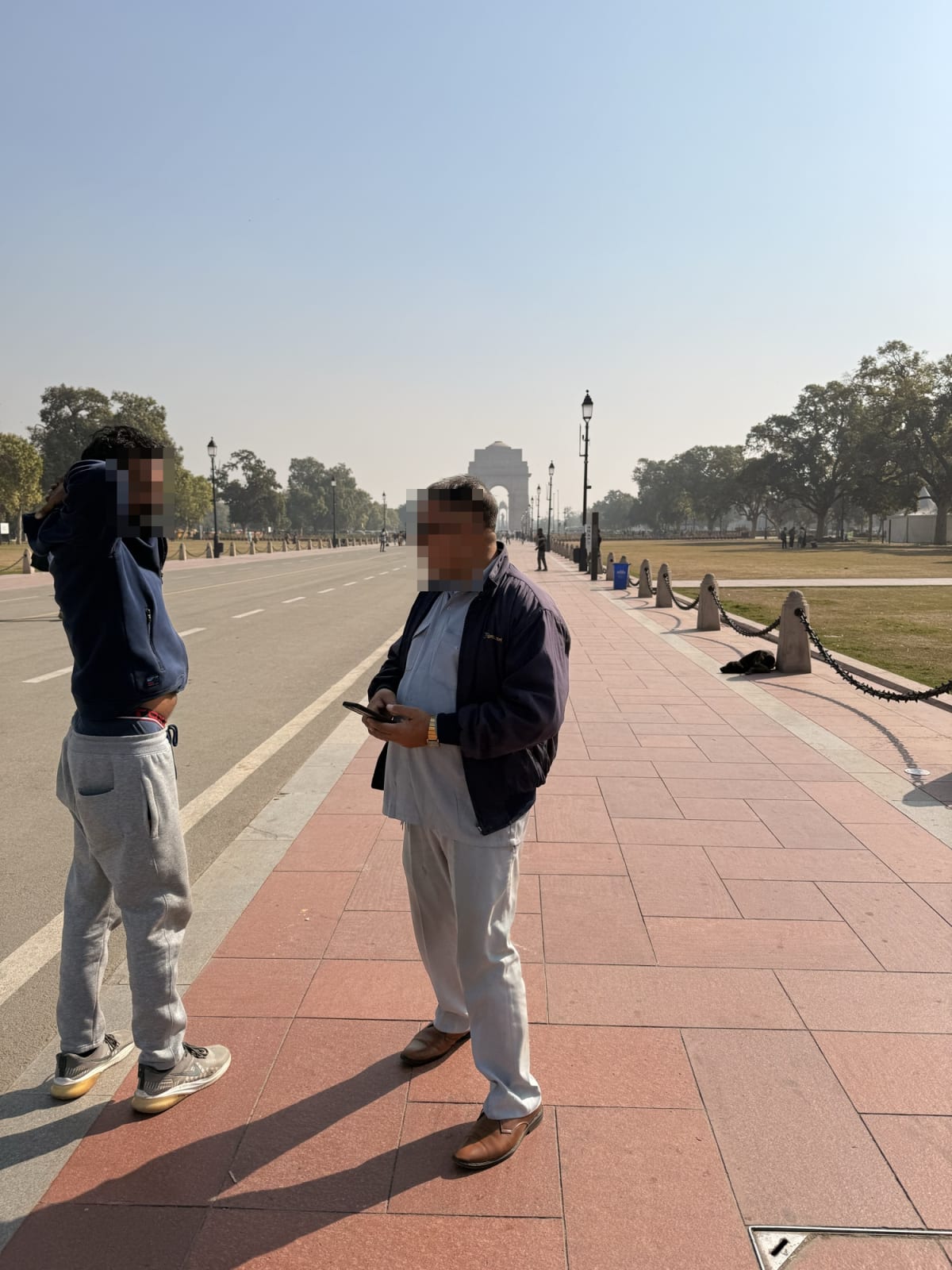
A little way on, the man who attached himself offering to guide me was the most unpleasant person I met that day.
As always I listened briefly and refused, and to the guide who kept clinging on I said listen and refused politely.
But this man kicked up a huge fuss even when I spoke calmly, and kept bothering me.
In the end I said more firmly that he had no manners and should not do that.
At that he started insulting me.
I said come here, telling him to come to my side.
At which he said you come here.
It was a bit funny, but my mood soured too.
So I told him that doing it this way ruins other people's day.
I said I would tell other Koreans and tourists his name so that nobody would use him.
At that, his pride evidently wounded, he told me to get lost.
So I pretended to film him on my phone while raising my middle finger as I walked away.
I felt a little ashamed of such a childish ending, but it did at least blow off some boredom.
Even work you do to make a living should not harm other people.
What is more, most of the guides I met cheated me on price.
They took haggling for granted, yet lost their temper the moment it turned against them.
I do not know what to make of such attitudes.
What struck me as the real problem was the way guiding works like this.
The Guide Who Apologised
I walked on more easily, but barricades blocked the way toward the Rashtrapati Bhavan building and I could not get in at all.
Another guide attached himself and said you could get there by going round the other side, and that he would drive me.
And that he would guide me around the whole of New Delhi.
I said politely that I was fine and moved away.
It was only eleven, but I thought I should start heading to Bukhara early, so I called an Uber.
I could not get one, so I sat in the shade, and the guide who had just attached himself came back and apologised politely for having been a bother.
And he apologised almost plaintively, saying it was some sort of day when there was almost no driving or guiding work, which was why he had latched on.
This man was a million times more decent, more human, than the guide who had insulted me earlier.
So we talked about various things, and I told him that I had booked an Uber to the ITC hotel where Bukhara is, but if it did not come I would use his tuk-tuk.
Sadly, though, the Uber matched the moment I said it, and I got in and left.
We set off at 11:15.
The Uber driver was a very nice man too.
He had an East Asian face, with a very clean way of speaking and good driving.
His English was very good too.
I do not know which East Asian background, nor whether he was an Indian born in India, but he was the best Uber driver I met.
The Uber came to 230 rupees.
The ITC Hotel

I reached the hotel at 11:30, and in a way that made the luxury obvious there were plenty of staff directing people outside.
I had a whole hour, so I waited in the beautiful lobby on a refined blue chair.
Then I walked around a bit, meaning to look over the hotel.

I was shown into a shop selling scarves by its owner and had a look, and there were many scarves I liked a great deal.
I had been agonising over what to buy my family, and the scarves appealed most.
Presents for others could be rough and ready, but I wanted to buy something for my grandmother.
But hearing the price, it was over 150,000 won, so I decided to think more about it and came out.
Going into the toilet, there was an attendant stationed in it.
The reason I went in was to change into long sleeves and long trousers for the dress code.
I changed in the cubicle, and the wide, spotless toilet made me think that however much it is India, a hotel really is different.
What is more, when I came out to wash my hands the attendant kept watching from beside me and handed me a towel the moment I had finished.
Most Koreans would find it uncomfortable, but this Indian style at a high-end hotel did not bother me.
And he was a young man with a shy smile who looked quite young, like a high schooler, and I do not know by what route he got the job here, but I hoped the pay was decent.

Bukhara had not opened, so I sat on a high chair out front and waited more than ten minutes.
A few people began gathering for the opening time.
It opened at 12:30 and, having a booking, I was able to go straight in.
A kind man with a very thick moustache helped show me in.
A feature of India is that staff at upmarket places are kind to the highest degree, better even than in other countries.
Bukhara

I was seated at a table for two, and the table was a tree stump.
It was remarkable.
Whether it was a stump or a section cut from the middle and carved I do not know, but it was wood.
It seemed they carve it like a table, coat it and then use it as one.
The drawback was that the table was very slightly higher than the chair, so you end up bending forward somewhat to eat.

First they open the water and give it to you without a word.
Obviously I knew it would be charged for, but I had to carry water out anyway so it did not matter.
And then grilled tortilla comes out with a green sauce to dip it in.
Thinly sliced red onion sprinkled with an unidentifiable yellow powder and a pepper-like spice comes out, with lemon slices to squeeze over it.
I do not know whether the tortilla was grilled or fried, but it was as crisp as a nacho, and at the end there was a chew to it that felt like the fried version: a very good snack.
The green sauce had a distinctive aroma and acidity, and dipping into it was very good.
I think it tasted very close to that Mexican green sauce, salsa verde or whatever it is.
It was slightly spicy too.
Ordering
There was a separate vegan menu.
But I could not tell what things were from the text alone, so I asked for a menu with images to see it directly.
And wondering whether a set menu might be cheaper, I asked whether I could see one.
At that they gave me a QR code and I opened the menu through it.
I ordered the Murgh Tandoori, which looked the most like a main.
And I ordered something called Tandoori Aloo and a Roomali Rooti.
I was worried about the price, but fortunately the kind staff said the Murgh Tandoori could be served as a half portion at half the price.
Once I had ordered, the restaurant filled up and the servers moved about very busily.
Most of them looked like businesspeople rather than tourists.
Tandoori Aloo and Tandoori Chicken
I was very hungry.
I was confident I would fall on it when it came.
I was so thirsty I ordered a Coke, and when I spilled it by accident they came and wiped it kindly.
The food came.

I did not know what tandoori aloo was; it is a fried potato thing shaped like a croquette with various fillings inside.
I cannot say exactly what, but it looked like meat, though it might have been green chilli.
There is a raisin-like sourness to it too.
A taste I had never had before.
The outside seemed fried, but rather than crisp it kept a dense texture, and it was extremely salty.
The inside had a very soft hash-brown-like texture with something like a raisin sourness.
Nuts were in it too, giving a nutty flavour.
It might divide opinion, but it was good enough that I thought I had done well to order it.
Being something I had never eaten before made it better too.
The tandoori chicken tasted exactly as expected, but it was extremely good.
Moist, and cooked to the highest standard.
It seemed to have some yellow spice rubbed on, with a faint curry aroma.
Of all the tandoori I have eaten, this moist, well-cooked one was the finest tandoori chicken.
Usually it comes red, yogurt-based, with a little char, and that is very good, but this was a different type and the cooking was better.
The roti, folded like a handkerchief, was simply unremarkable.
It was closer to a dry texture and not good, but with the chicken and the aloo being salty it worked to balance the seasoning.
I ate hungrily and well, but after finishing the chicken and about two of the aloo I was full.
The two aloo were a bit of a struggle.
At least I had the Coke.
Eating With My Hands
At the very start they asked whether I would eat with my hands in the traditional Indian way, and when I said yes they did not bring cutlery at all.
I had meant to eat with my hands anyway, so I said yes gladly and ate with my hands even once everything had arrived.
Looking at the other people, everyone was eating with their hands, so I thought I had chosen well.
Above all, eating with your hands is convenient, which was good.
But once I had finished my hands were so greasy and dirty that I was stuck.
I asked whether there was something like a tissue, and they said not really, then said they would bring something, so I waited.

What they brought was water like sparkling water, as if boiled with lemon in it.
Putting your hands in it is very warm, and by some principle I do not understand, bubbles rise with a fizzing sound like soda water and tickle your fingers.
I dipped the right hand I had eaten with and cleaned it well.
It was better than I expected, though I did not much like the lemon scent staying on my hands.
I could not remember which hand you eat with in India, but in my hurry I had eaten with my right rather than the left I use for my phone.
Checking later, fortunately the right hand is the correct one.
Kulfi
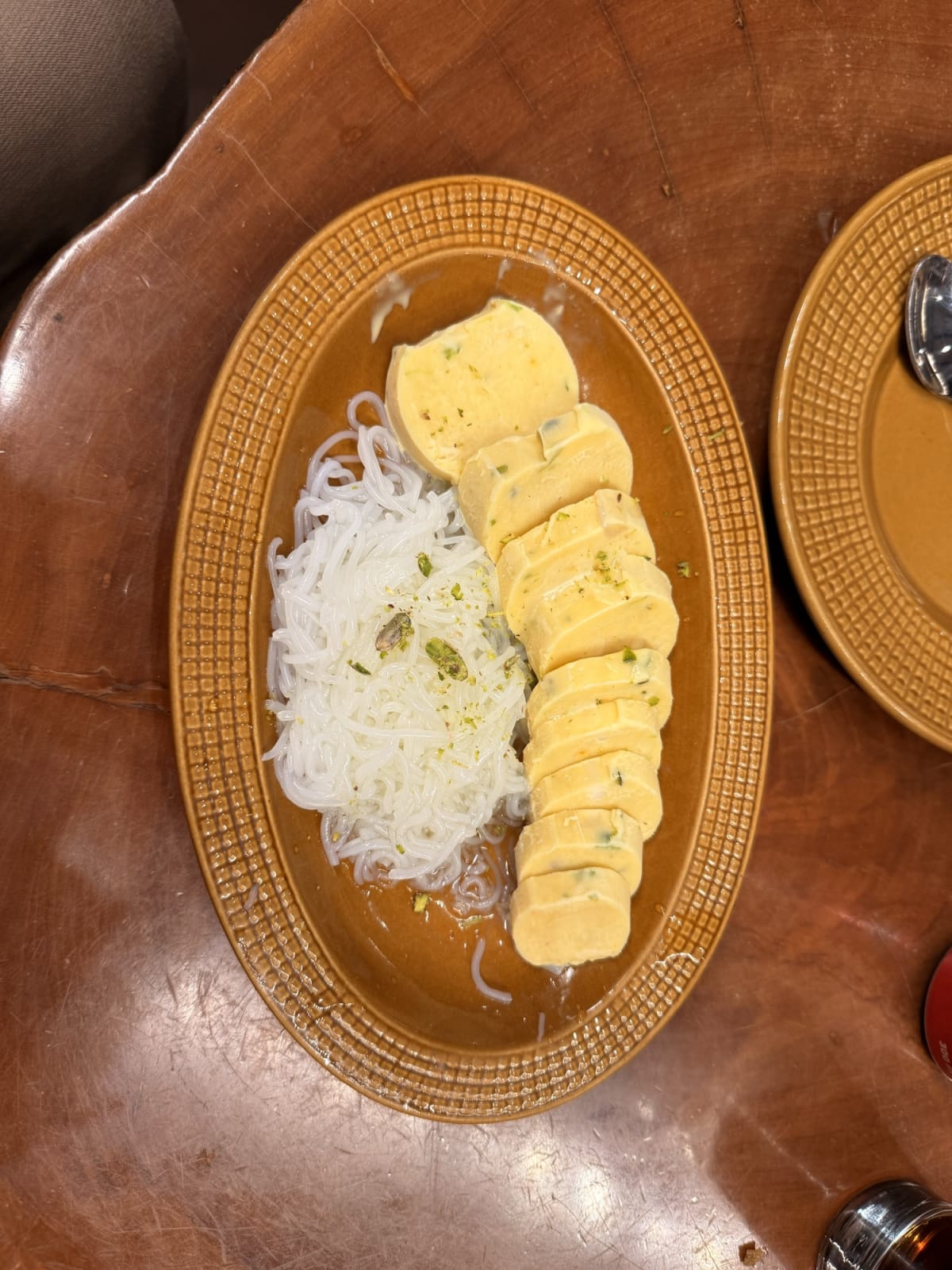
I was curious about dessert and wanted to try several things, but they were so expensive that I ordered kulfi, which I had never managed to try on the street for fear of an upset stomach.
The kulfi, long like a banana and yellow like a banana skin, was served sliced, with something like glass noodles beside it and a little pistachio sprinkled on top.
I had expected a sorbet texture, but eating it, it was chewy and rich.
I could not say what the flavour was, but it was close to pistachio ice cream.
The sweetness is strong and grows stronger toward the end.
The glass-noodle thing had the texture of that decorative garnish served with sashimi, and tasted of nothing, so it was no good.
The kulfi was good.
The Bill
It came to 6,495.9 rupees in all.
Having been to a few restaurants by then I knew they add a service charge as they please, so thinking there was one here too I asked for it to be removed.
At that they said it was not service but tax, and looking again, it was indeed not a service charge.
One of India's finest restaurants charges a lot for a single meal and earns plenty, so it seems not to stoop to that kind of pettiness.
Expensive, but a restaurant that satisfied me in many ways.
I do not expect to come to India again, but if I did, Bukhara is a place I would have to return to.
If I came back I think I would order the tandoori chicken and the tandoori aloo again.
I would skip the roti and look up the other dishes properly before ordering something else.
I think I would have the kulfi again too.
The Scarf Seller
On the way out I went back to the scarf shop, but the owner was not there.
So I stopped at the toilet, changed back into shorts and a t-shirt because of the heat, booked an Uber and waited.
Just as the Uber arrived at the hotel's main entrance and I was about to get in, the man selling scarves came rushing over.
I said I had gone and the owner had not been there, and at any rate he said he had been waiting for me the whole time.
From his face he looked very much the worse for it, and it really did seem he had been waiting for me somewhere, which made me feel a little sorry.
What is more he had been very kind and let me try everything on, so I had liked the man.
But the Uber was waiting, so I said sorry and left.
Thinking about it in the taxi, it seems I did well not to buy, because it was expensive even for expensive.
I think it was about 150,000 won each, the price of going to Bukhara twice.
The People Tapping on the Window
Getting to Qutub Minar took about thirty minutes.
The traffic was still brutal and the exhaust very bad.

Partway we were stopped at a light in a spot thick with cars, and a man carrying books stacked like a tower and girls carrying flowers to sell tapped on the window, kept looking in and spoke to us, begging us to buy.
I found the scene remarkable and took a photo of the girls, and the kids who could not be shaken off by any means left the instant I pointed the camera.
Even so I thought taking a photo openly like that had been rather rude.
And when the man with the books came over, I pretended to look closely at the books as if about to buy, so that he would not press me.
In truth lunch had made me sleepy and I wanted to be left in peace.
I kept up the pretence of scanning the books up and down to see what there was for quite a while, and after a good minute the man went off as if he had only now realised I was not interested.
Qutub Minar
I got out of the taxi and went to the ticket office.
The foreigners' queue was shorter than the locals' one, so I could buy a ticket straight away.
Curiously, in India they give you something like a token rather than a ticket.
You hand it to the guard at the entrance or drop it into something to go in.

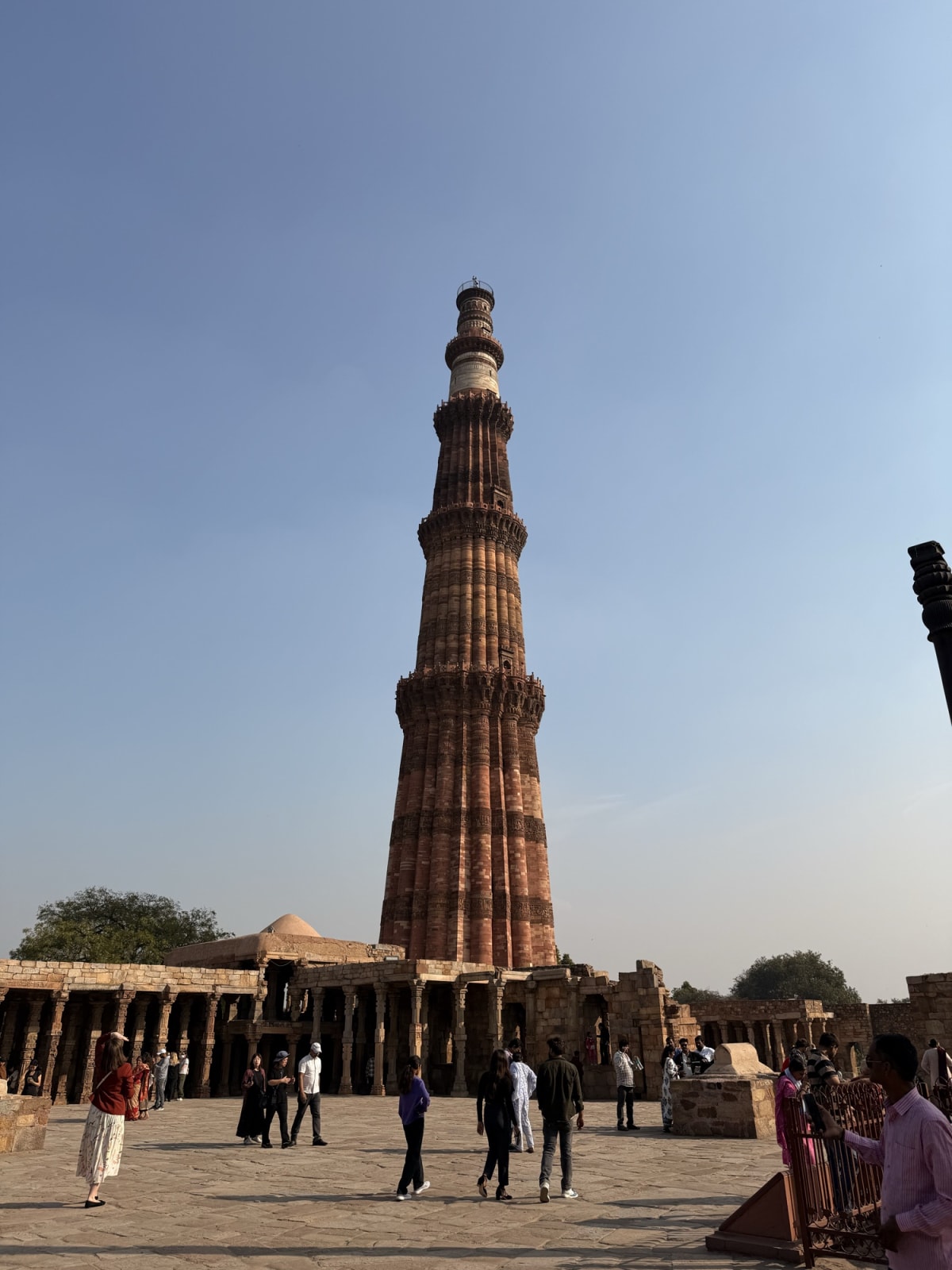

The moment I went in the smog was heavy and the sun was entirely behind everything, so it was mostly dark.
If I had not brought sunglasses I would have been in real trouble.
The first thing you see on entering is the great tower that symbolises Qutub Minar.


I had many places left to go and felt pressed, and I was thrown to find that the site, which I had assumed was just that tall tower, was wider and had far more to see than I expected.
Still, the site was more beautiful than I had expected, so I looked around it fairly thoroughly.


Here too, partway round, there were two young men with some sense of style who asked for a photo.
They spoke no English at all and took photos brutally badly, so I showed them how to do it and took some of them as well.
Looking at the photos, the proportions on these kids were extraordinary and their faces were good too, which made me feel like a potato.

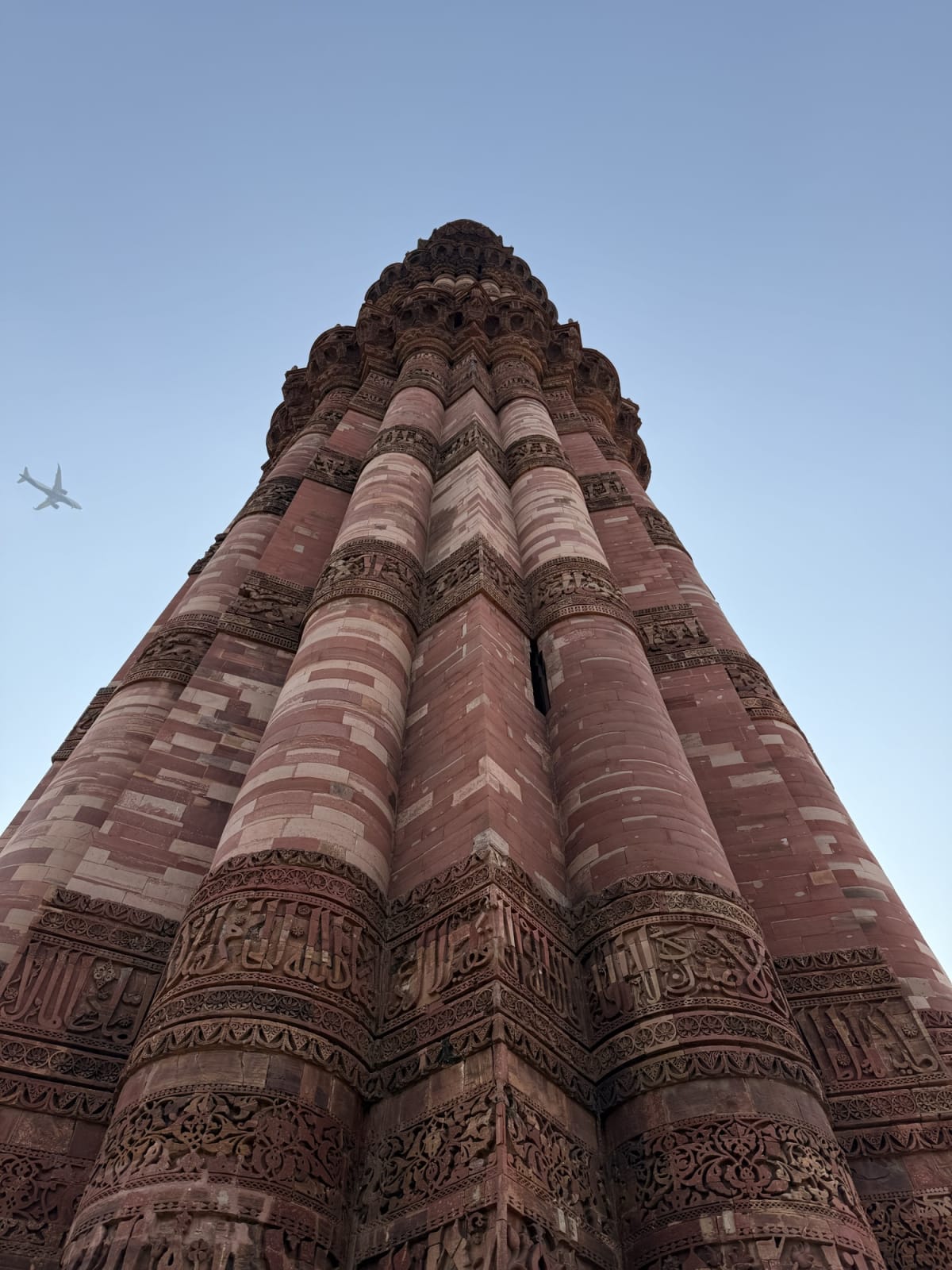
The Qutub Minar tower is extremely tall and covered in intricate, beautiful patterning, and it was worth seeing.
And the whole site is wide and well kept, so it is somewhere I could happily look around slowly next time I come to Delhi.
This time too I looked around without rushing.
But having lost some time, the Red Fort was clearly going to be out of reach.
The Red Fort is a UNESCO World Heritage Site and a must in New Delhi, so it was a great shame.
I booked an Uber, and naturally I had to go outside the site to take it, and it had parked near the entrance.
So I went assuming I could leave by the entrance, but the exit was elsewhere and I had to go a fair way round.
I think the Uber waited about ten minutes for me.
I was drenched in sweat from running about too.
The driver had the sense to put the air conditioning on, so my sweat cooled quickly, which was a relief.
I absolutely wanted a shower before the night flight later.
I arrived at 3:10, looked round for thirty minutes and booked an Uber about 3:40.
If I came later, it is somewhere I would want to spend an hour.
Next I headed for the Lotus Temple.
This was a fair distance from Qutub Minar too.
Having cleanly given up the Red Fort, I had a little more time.
That tower is the Qutb Minar, 72.5 m high, the tallest masonry tower in India.
In 1199 Qutb al-Din Aibak raised the first storey to call people to prayer, and his successor Iltutmish added three more.


The mosque northeast of the tower is the Quwwat-ul-Islam, the oldest mosque built by the Delhi Sultanate.
The columns of the cloisters are the columns of twenty-seven Hindu and Jain temples that stood on this site, taken and reused as they were.
The 7 m iron pillar in the courtyard dates from the fourth century.
Erected under Chandragupta II, it has barely rusted in sixteen hundred years and remains a puzzle of metallurgy to this day.


The ornate gate to the south is the Alai Darwaza, added by Alauddin Khalji in 1311.
It was inscribed as a UNESCO World Heritage Site in 1993.
The Lotus Temple


I reached the Lotus Temple a little after four.
There was no entrance fee, so I simply walked in.
There were a great many people.
I had heard it was somewhere locals want to visit too, and I could well believe it.
There were so many people it was hard to move forward.
The Lotus Temple was visible in the distance, but the sky was very yellow so it did not move me much.

There were a fair number of East Asians here too.
Indians were overwhelmingly the majority, then Westerners, with East Asians very few.

After a certain point you have to take your shoes off, so I took one of the plastic bags they hand out.
The floor is clean, for India.
Being a temple held sacred, they seem to clean it often.
Even so it looked like my feet would get black with dirt, so I debated whether to keep my socks on or off.
Because you can always wipe your feet with a wet wipe.
Thinking I would wear the socks and then throw them out anyway, I went in with them on.
This place, built in the form of a lotus, has a small artificial pond like a pool.
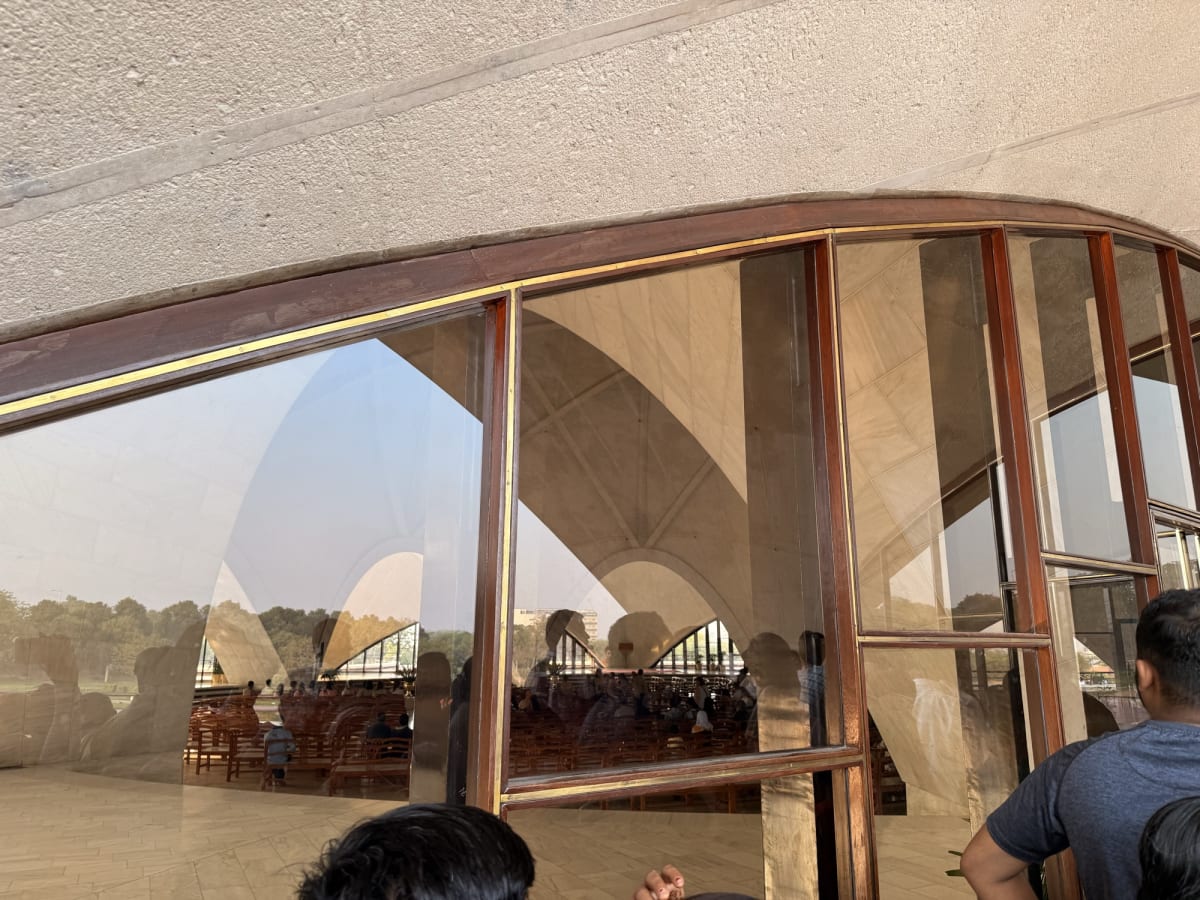

You look at it and go up the steps in a loop, and with so many people it moves slowly.
Up on the second level you reach the temple entrance, where staff form queues, break them up and let one row in slowly at a time.
Once inside, the staff look after it well so that it stays very still and quiet.
The seating is the wide kind you get in ordinary churches.
I sat down in one spot and rested a little.
My legs did ache.
It was cool inside, and the stillness was kept well, so it was a good place to sit quietly.
Most people just sit for a moment and leave, but it is somewhere worth staying longer.
I came out straight away myself, given my schedule.
There is not really anything inside worth photographing on a phone anyway.
I came out and put my shoes straight back on.
There were a great many people on the way out too.
I stopped at the toilet to sort myself out and stood inside the main gate, and through the iron gate the touts were making a racket trying to sell things and the taxi drivers were making a racket touting against each other, so it was uproarious.
With the iron gate as a boundary I just browsed the souvenirs at leisure and booked an Uber.
I think I was there a little over thirty minutes.
The Lotus Temple is a house of worship of the Baha'i Faith.
It opened in 1986 and was designed by the Iranian-born architect Fariborz Sahba.
In the form of a half-opened lotus, it is ringed by twenty-seven marble-clad petals in three layers of nine.
A Baha'i house of worship is open to believers of any religion, and there are no sermons and no rituals.
With no sermons and no rituals, the inside is always quiet.
To Humayun's Tomb
The Red Fort was unavoidably out of reach for the time.
So I headed straight for Humayun's Tomb.
Just getting there took a while.
About twenty minutes, I think.
Humayun's Tomb was larger than I expected, which made me think I had done well to skip the Red Fort and come.
The entrance fee was a very expensive 600 rupees.
The Tomb of Isa Khan


At the entrance there was something off to the right first, so I went over, and it was the tomb of Isa Khan.

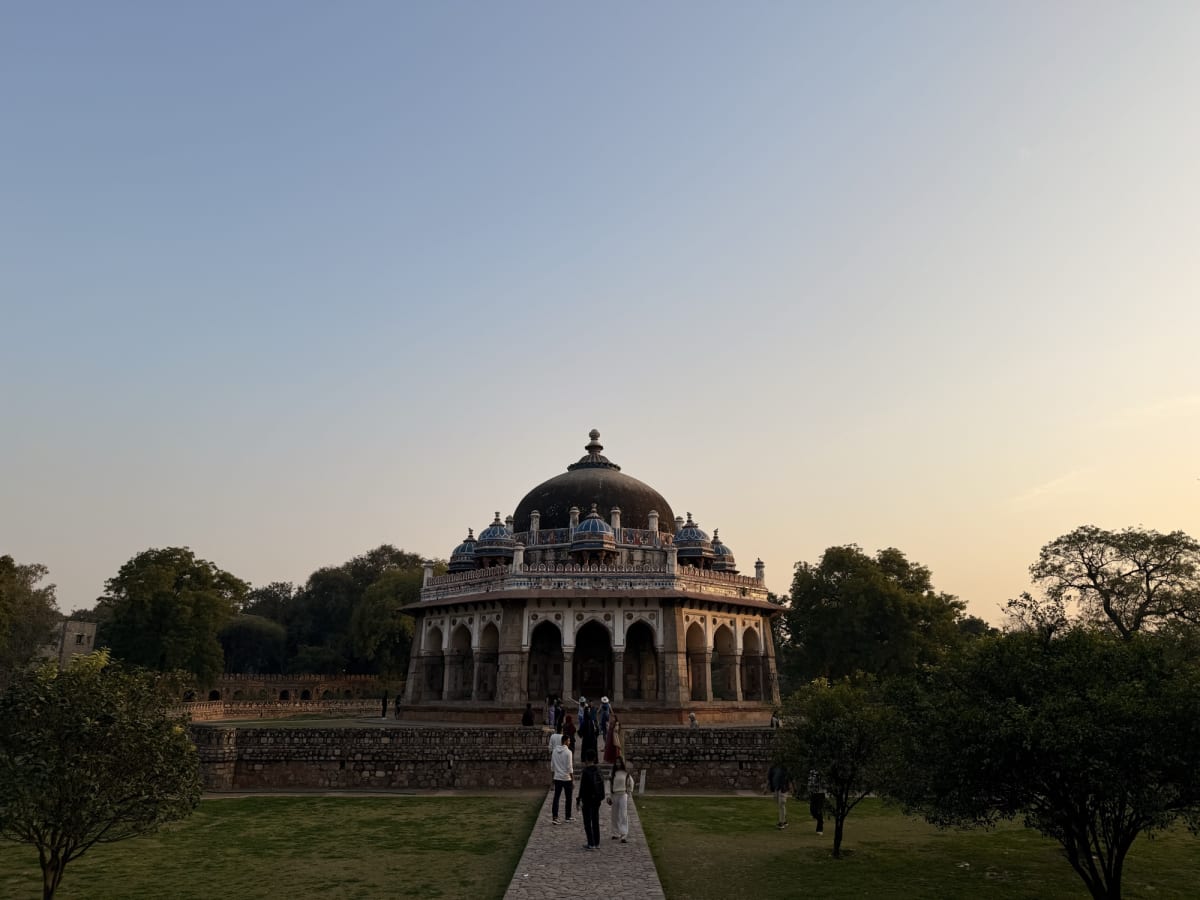
It is small in scale but had atmosphere, which I liked.
It was simply good for looking around slowly.
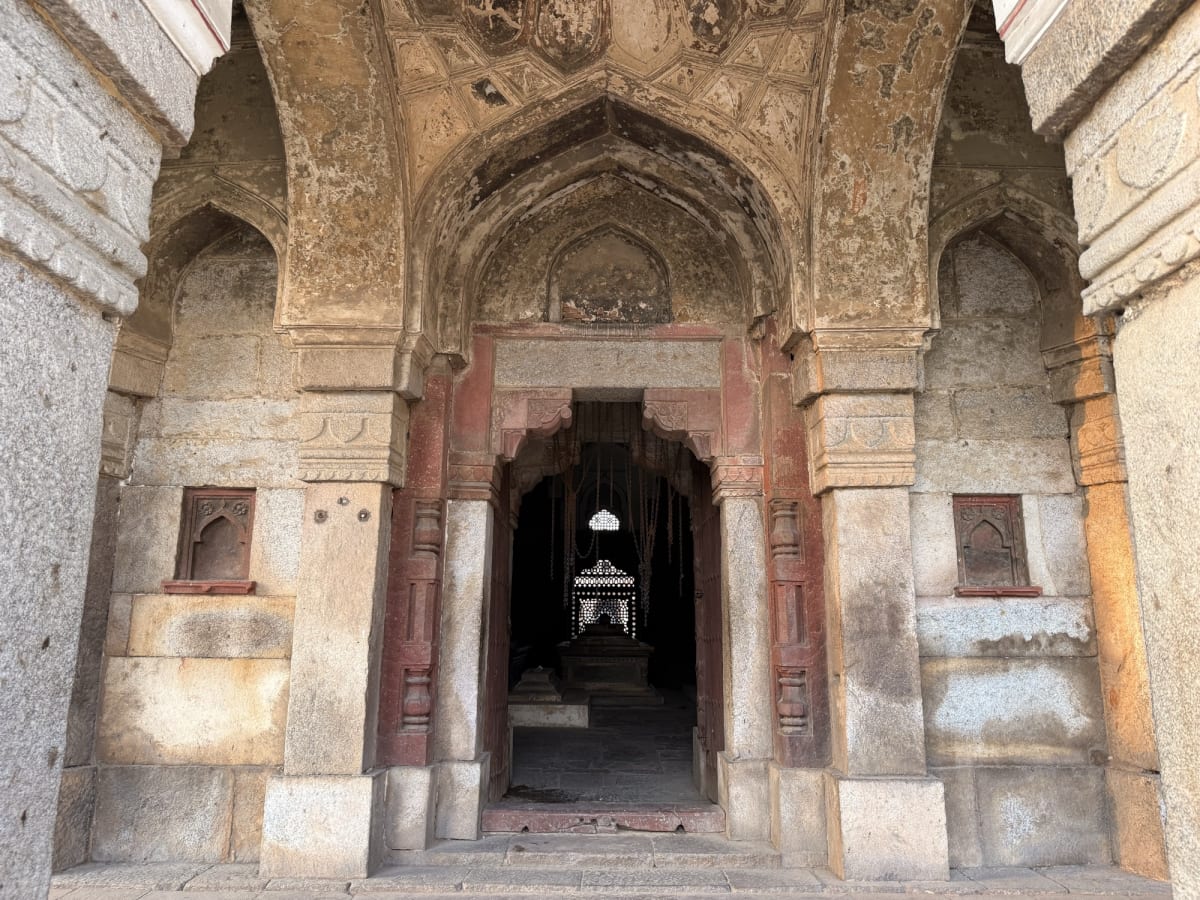

With no real upkeep you could go inside and even touch the graves.
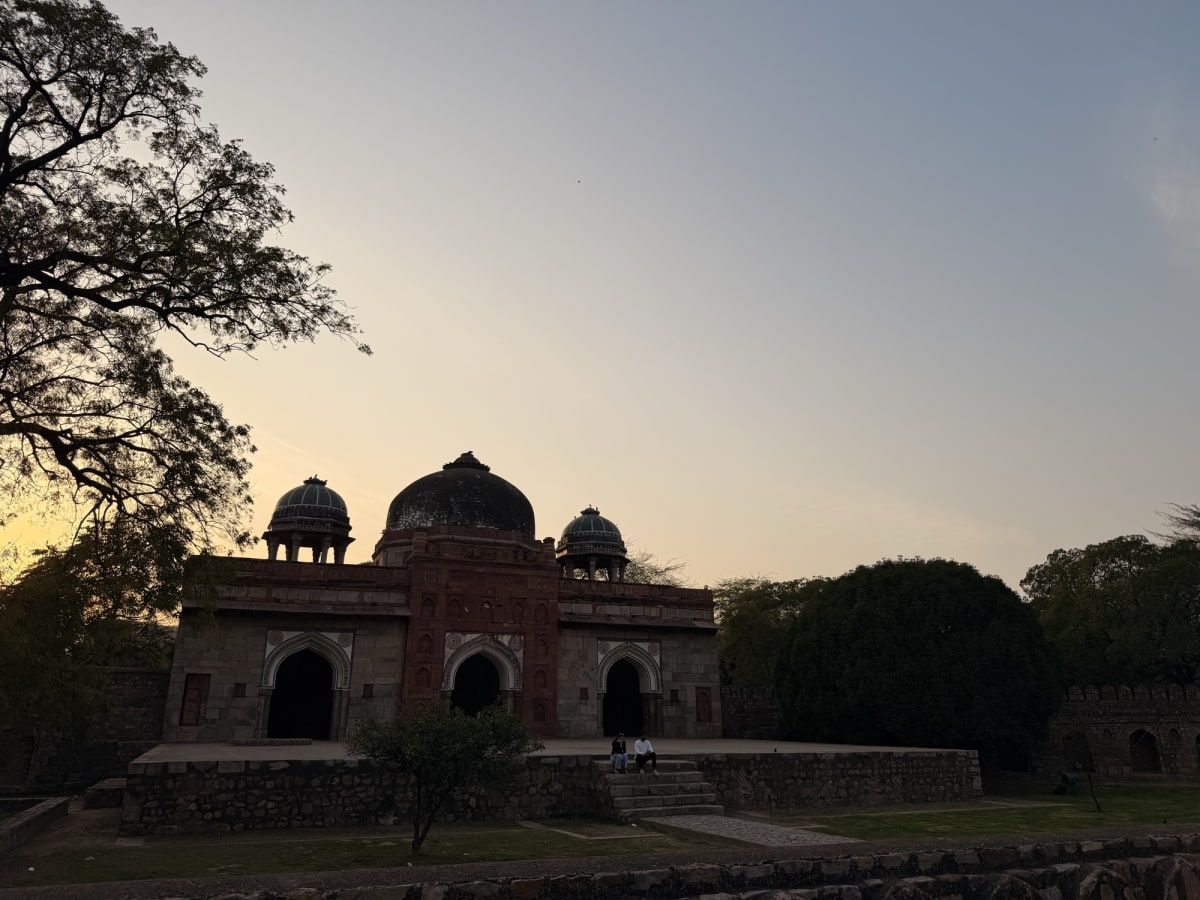

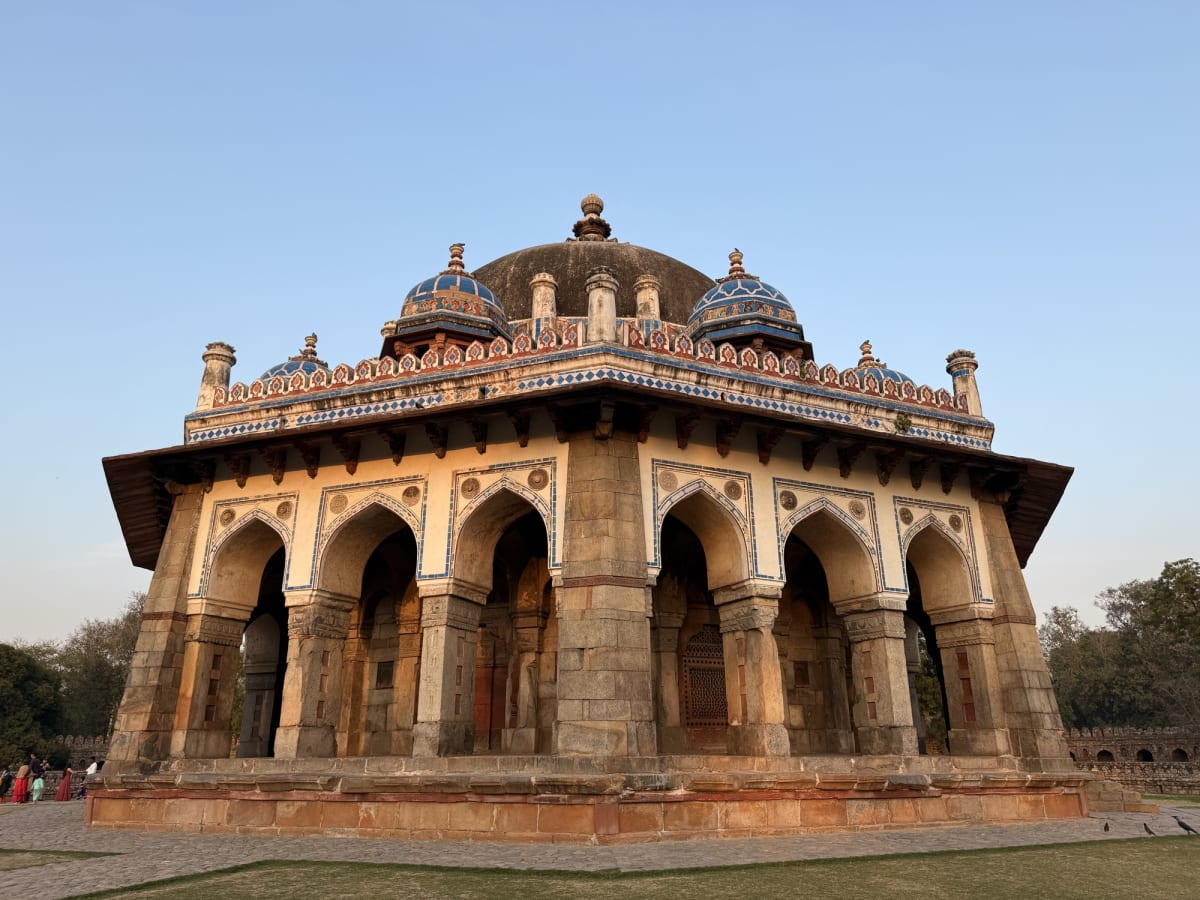
It was gradually turning to dusk, which gave it more atmosphere.
That small tomb is the grave of Isa Khan Niazi.
Not a Mughal but an Afghan noble who served under Sher Shah Suri, the tomb was built in 1547 to 1548.
It is an octagonal plan in red sandstone, and it is more than twenty years older than Humayun's Tomb.
The great tomb standing beside it is held to have drawn on the design of this small one.
Humayun's Tomb

Going into Humayun's Tomb, the attendants greet you in Korean and ask whether they should take photos.
They said they do not take money, but knowing they would take it after the photos I just walked past.
Coming through the entrance you can see water channels as at the Taj Mahal, though compared with the Taj they are very cramped and small.
There was a group of five Koreans, whether colleagues or travelling together.


Unlike the Taj Mahal, Humayun's Tomb was made of red brick.
The scale is large, but having seen the Taj Mahal it did not move me much.
The building was magnificent all the same.


You can go inside, and there was no real upkeep here either.
But as six o'clock, the closing time, approached, the attendants came and drove people out like a flock of birds, saying it was time to leave.
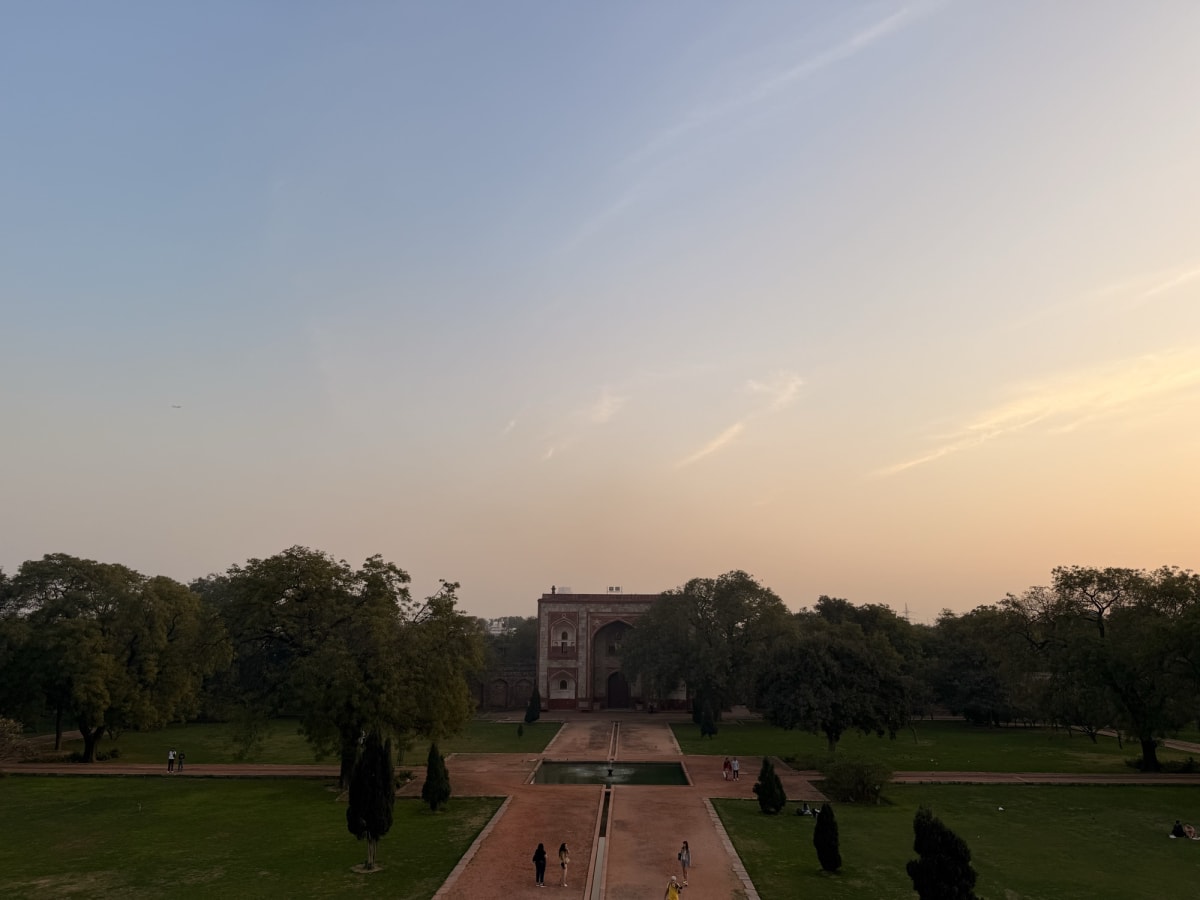

The sun was setting on the far side and the view was wonderful.

I asked the group of Koreans I had seen earlier for a photo, and a quiet-looking man took it.
He took it well enough to justify what people say about Koreans being good at photos.


I dawdled on the way out and left slowly.
Because there was nothing else on the schedule now; the day would end once I had dinner.
Humayun's Tomb was completed in 1570.
It was raised by Humayun's wife Bega Begum, and designed by the Persian architect Mirak Mirza Ghiyas, brought in from Herat.
This tomb introduced the charbagh garden tomb to India.
It is the form in which water channels and walkways divide a garden into four, with the tomb set at the centre.
The Taj Mahal, Akbar's tomb and every Mughal tomb after came out of this.
In order of succession, the Taj Mahal is this tomb's descendant.
More than 150 Mughal royals are buried here, which is why it is also called the dormitory of the Mughals.
It was inscribed as a UNESCO World Heritage Site in 1993.
To the Last Supper
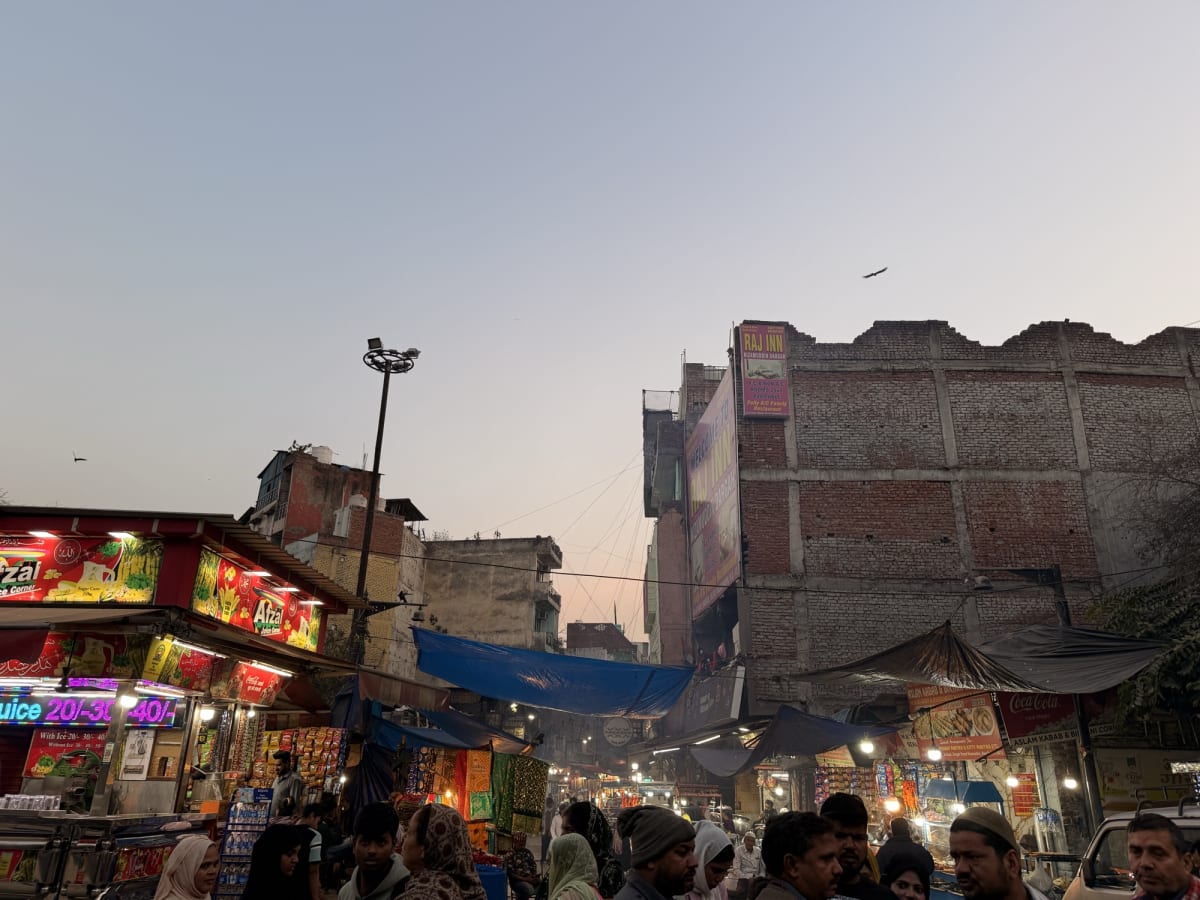
Indian Accent, which would round off the last supper, was close enough to walk to.
I left about 5:50 and after walking around twenty minutes arrived at The Lodhi hotel.

It seemed to be the most upmarket hotel in India.
Michelin-starred restaurants are mostly located in high-end hotels.