India 2-2 · The Ganges
The Ganges
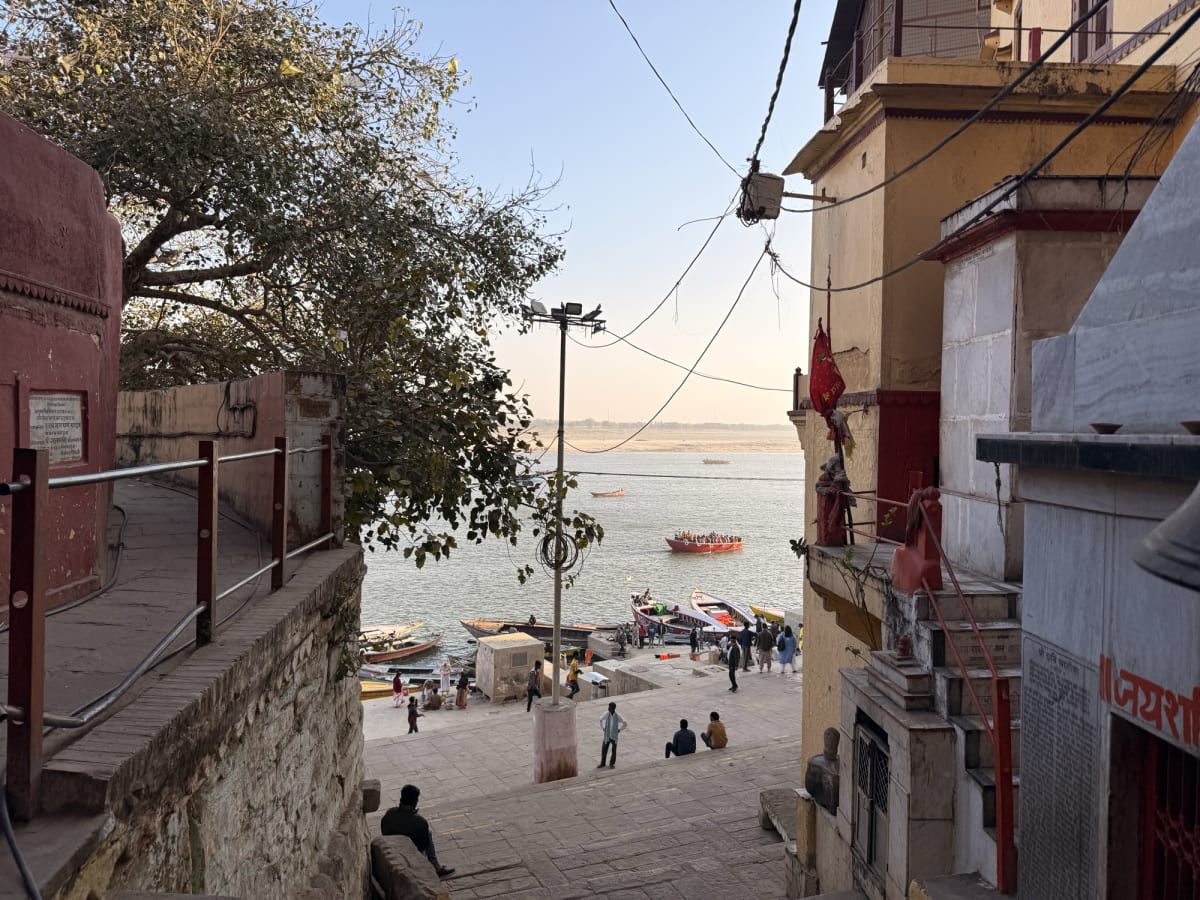
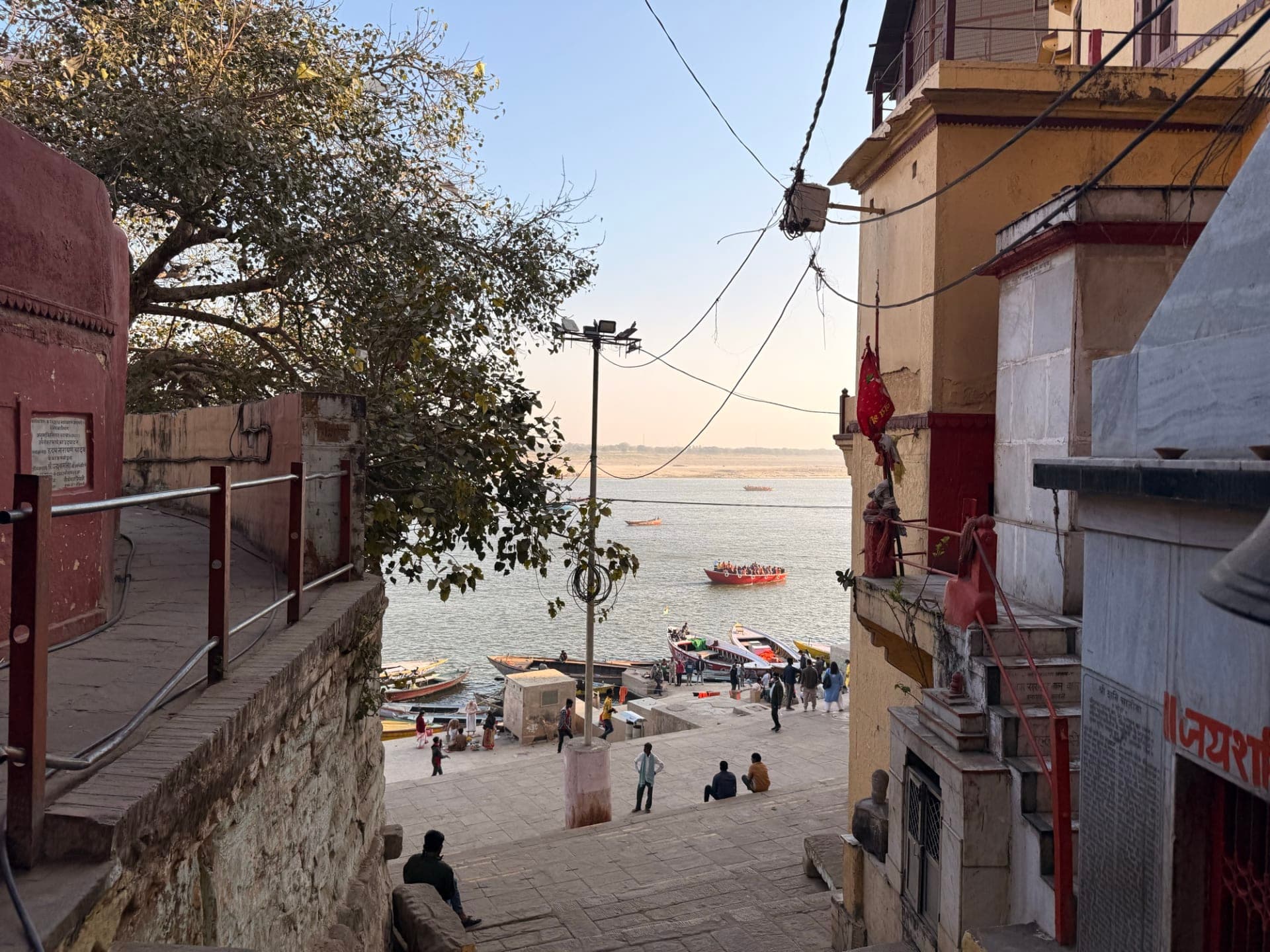
In Hindi the Ganges is called Ganga.
The word comes from Sanskrit Gaṅgā (गङ्गा), meaning 'the one that goes swiftly'.
The name Ganges came from the classical Greek transliteration Gángēs, later read the English way.
A holy site of Hinduism: people bathe here, and when they die their bodies are cremated and scattered into the Ganges.
People do their laundry in it and scoop it up to drink, and industrial plants of every kind discharge their polluted wastewater into it.
In a word — eating, washing, dying? — it handles everything. It is the ground of their lives.
Unless you live here, your health is definitely better served by only looking.
The epidemic disease 'cholera' is itself endemic to the Ganges, which tells you everything.

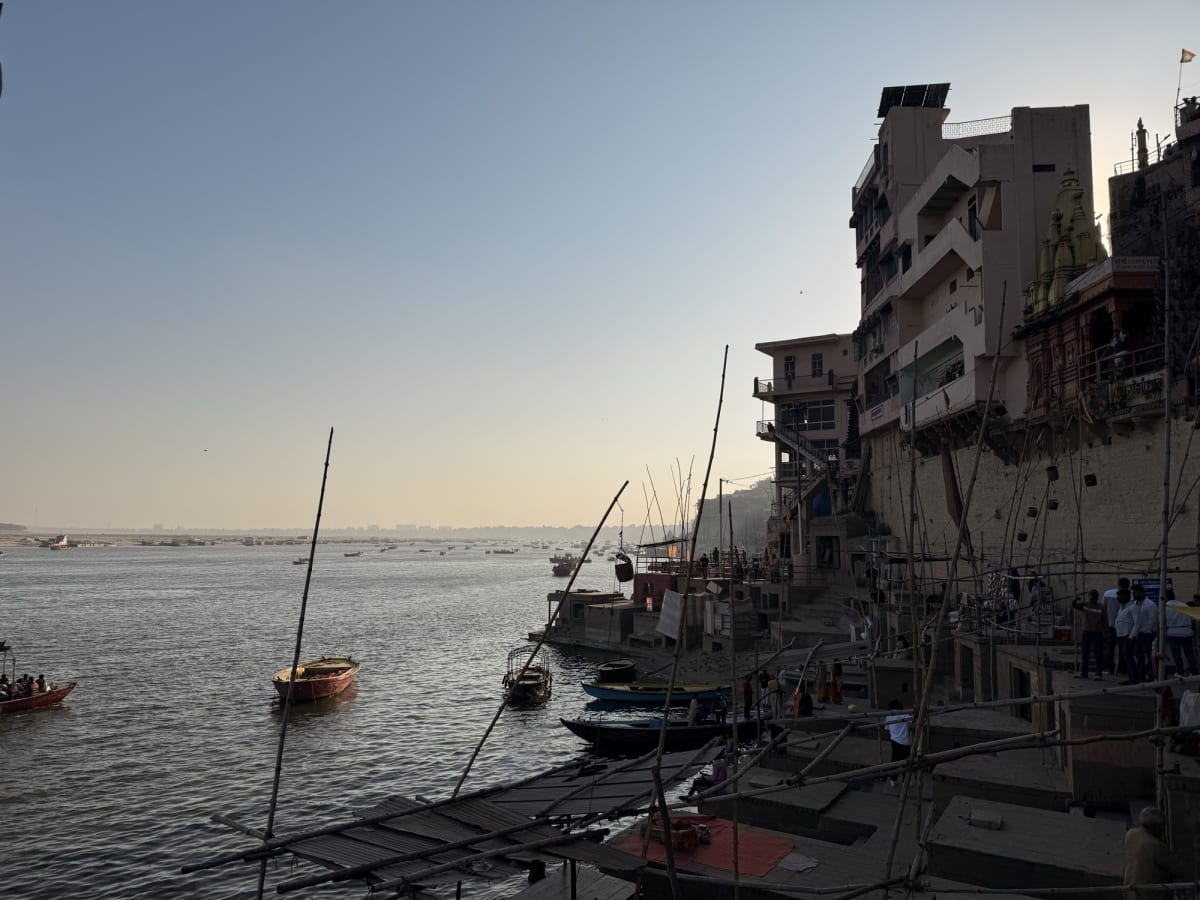
For all its fame, the river was narrower than I had pictured.
Probably because I live in Seoul, where I see the Han every day — one of the widest rivers running through any major city in the world.
The water wasn't the sewage colour I had imagined.
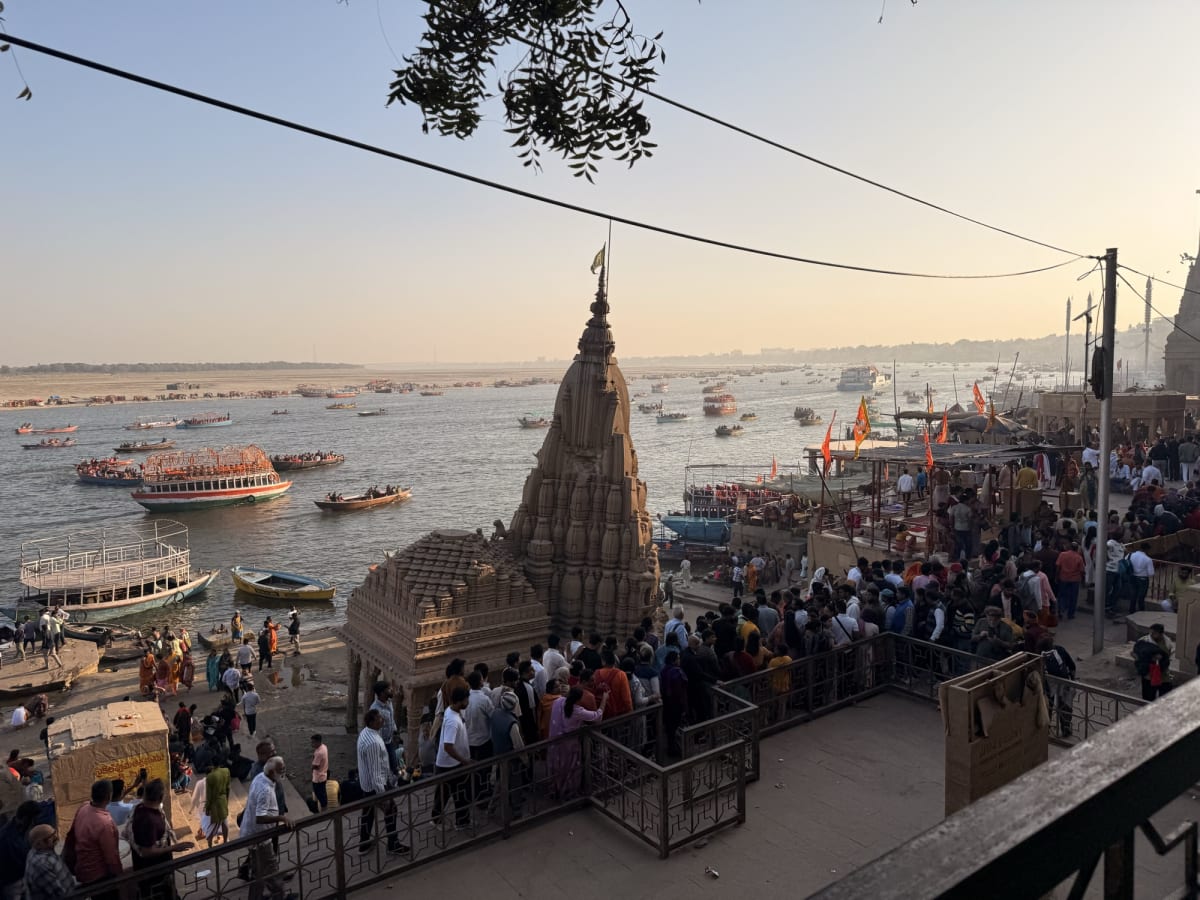
And it wasn't swarming with people yet.
But the further down I went the more of them there were, until it was packed too tight to move forward.

It was a shock that pissing straight onto a wall, with or without an audience, is simply routine here.
I needed to go myself, but as a newcomer to India I felt I'd rather hold it for ten hours.
Just then an Indian man introduced himself as being from Punjab and asked for a photo together, so I took the photo and walked on down.
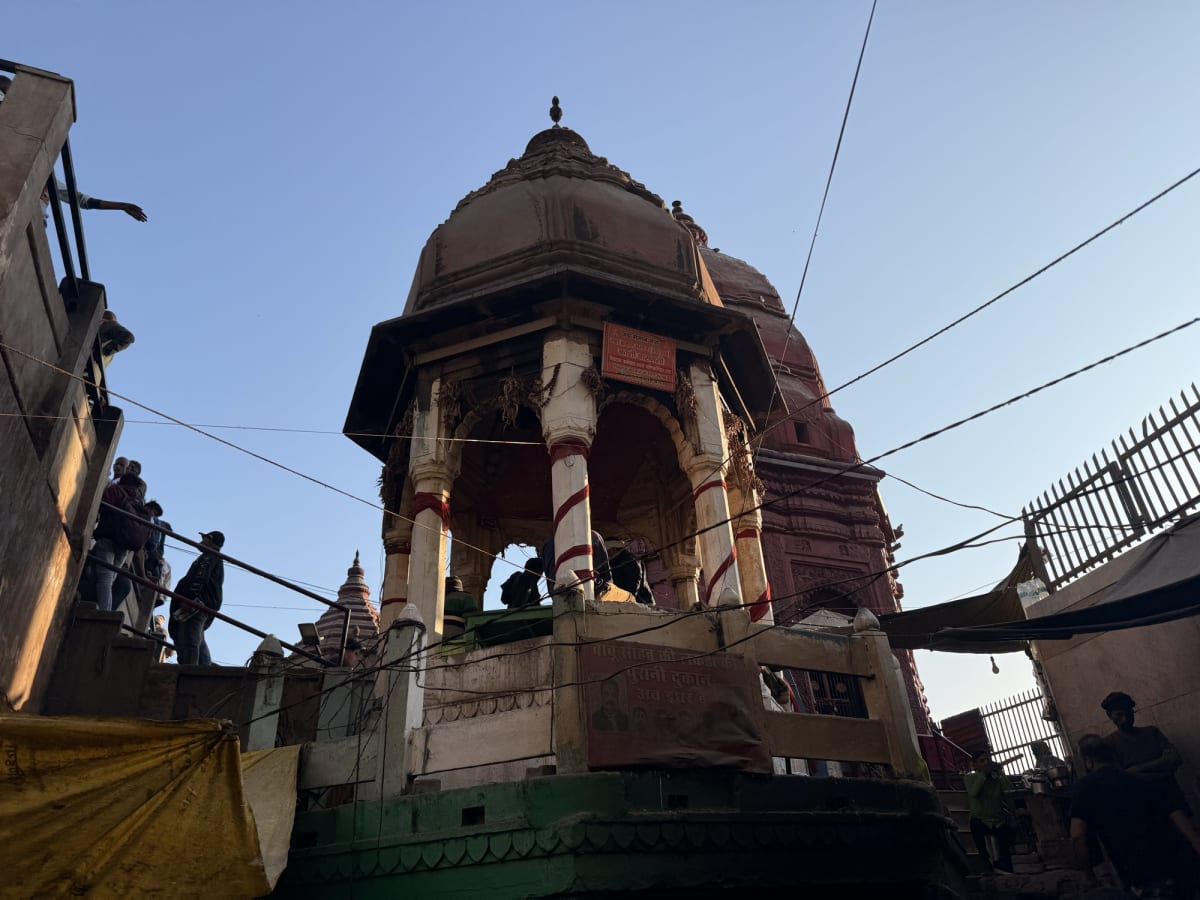
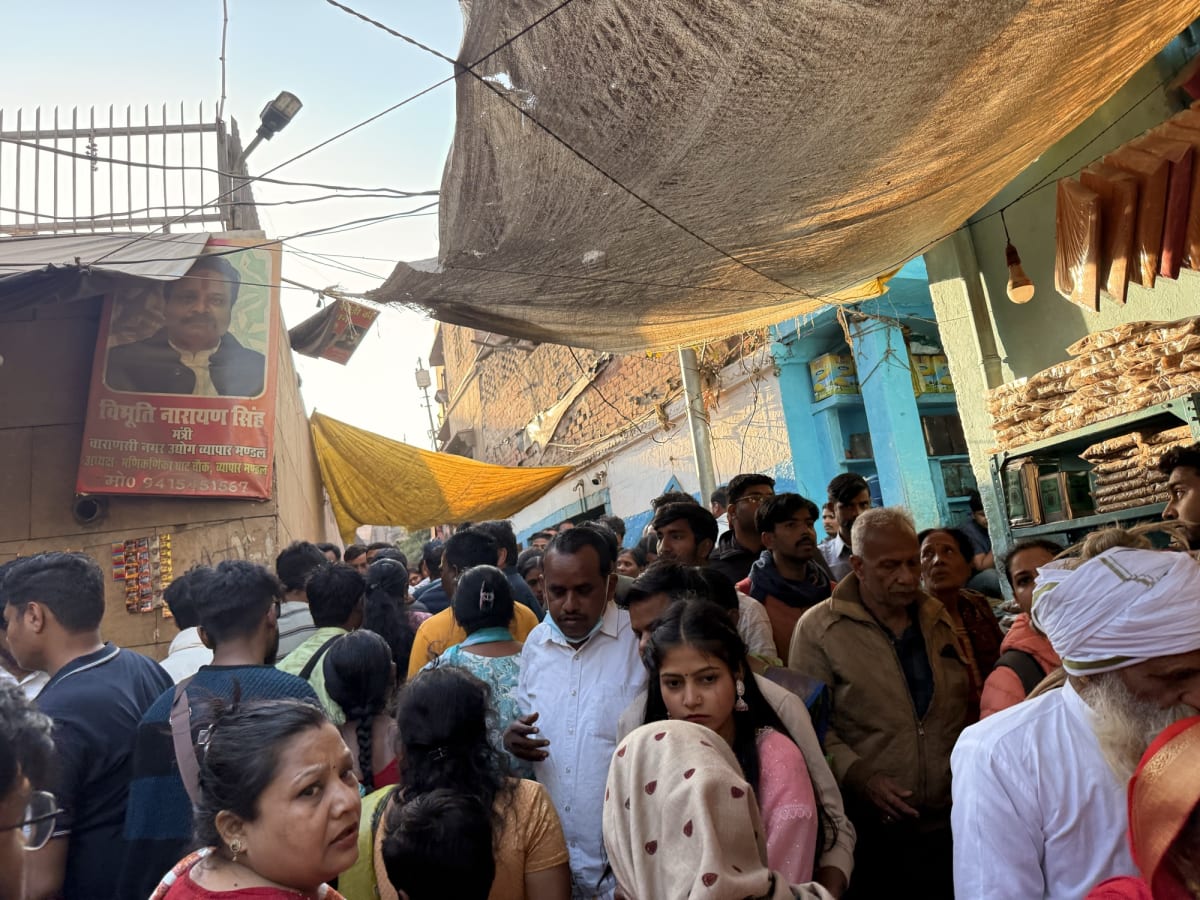
Going down, there were so many people that I could only move forward when someone shoved me from behind.
Judging by the long procession in the alley earlier, there must be a festival today.
I had meant to walk all the way down to Assi Ghat, but I was only about a third of the way and judged I didn't have the time, so I gave it up.
I felt no need to walk on down the riverbank just to look at the same view for longer.
More than that, the smog was so heavy that I could barely see ahead, and whatever I looked at lost half its effect.
And the worst of it was that there were too many people to move forward at all.
A thirty-minute walk probably took me an hour.
Blue Lassi

I had meant to try three lassi shops too, but I only went to Blue Lassi — the nearest, and seemingly the best known of them.
It was close by, so I got there quickly.
There were street dogs on the way, so I had to watch myself.


The moment I arrived at Blue Lassi, the sight of the lassi-making counter left in a filthy mess made me worry about the hygiene.
I bought one anyway.
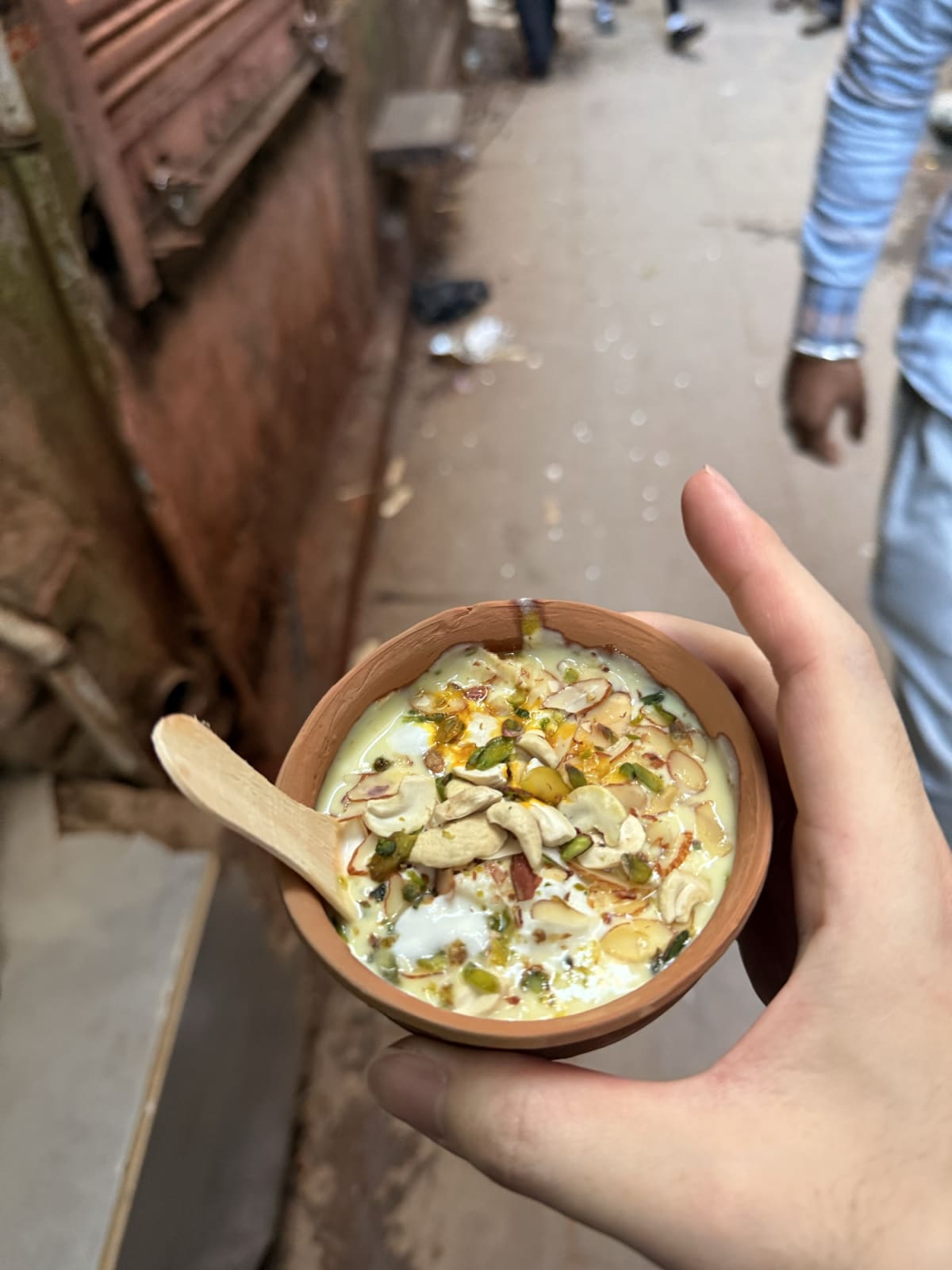
The several lassis they had going were all the same, and I just asked for one, so I don't know its name.
It was a nut lassi, packed with nuts.
I don't remember the price either — about 70 rupees, I think.
It looked genuinely delicious, and one spoonful was full of the bright, deep taste of yoghurt and rich nuts. It really was good.
But the hygiene worried me, so I ate only one spoonful.
My stomach is weak as it is, and once traveller's diarrhoea sets in I felt I wouldn't be able to go anywhere but the toilet.
The cup the lassi came in is made of clay, and I had heard you just throw it down on the ground to be rid of it.
I had been wanting to hurl one hard at the ground and smash it, but it brought no particular satisfaction.
A Hell of People
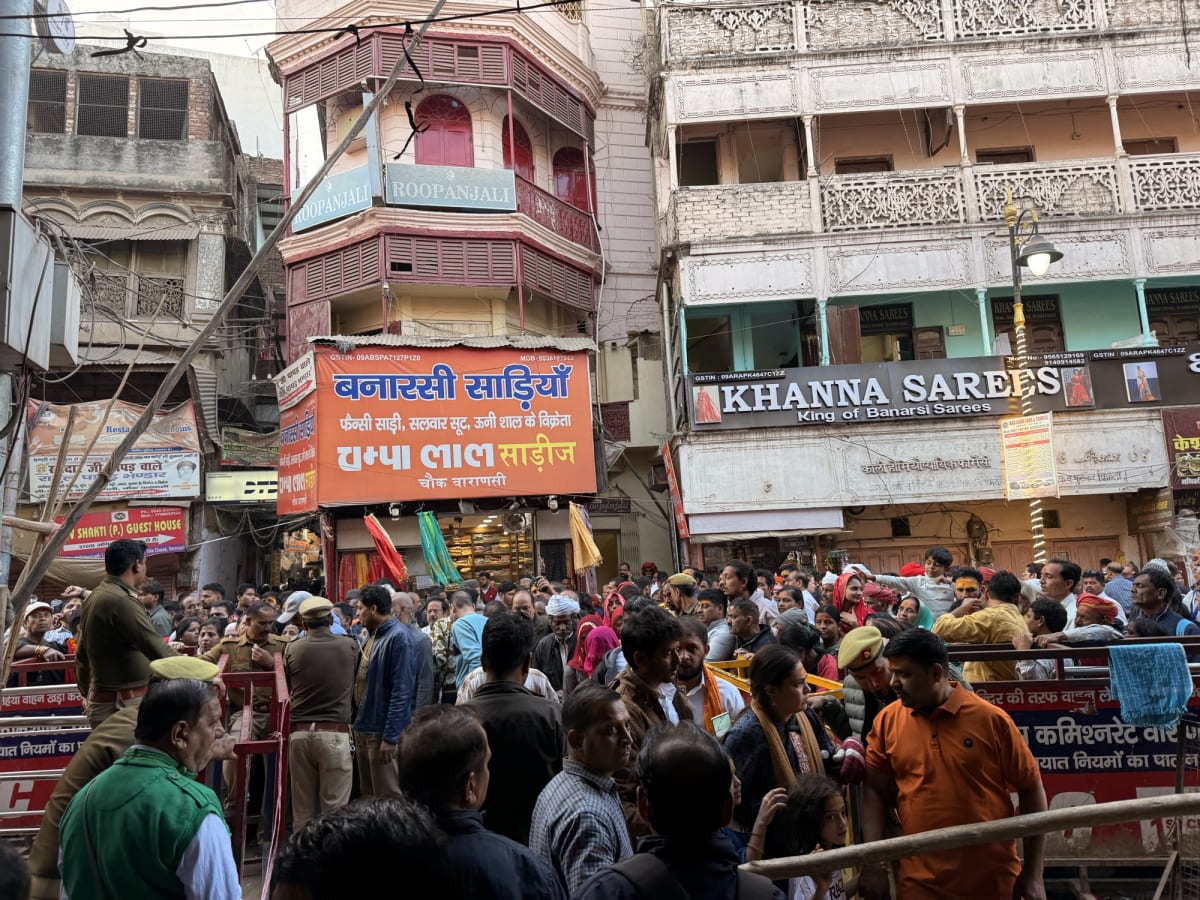
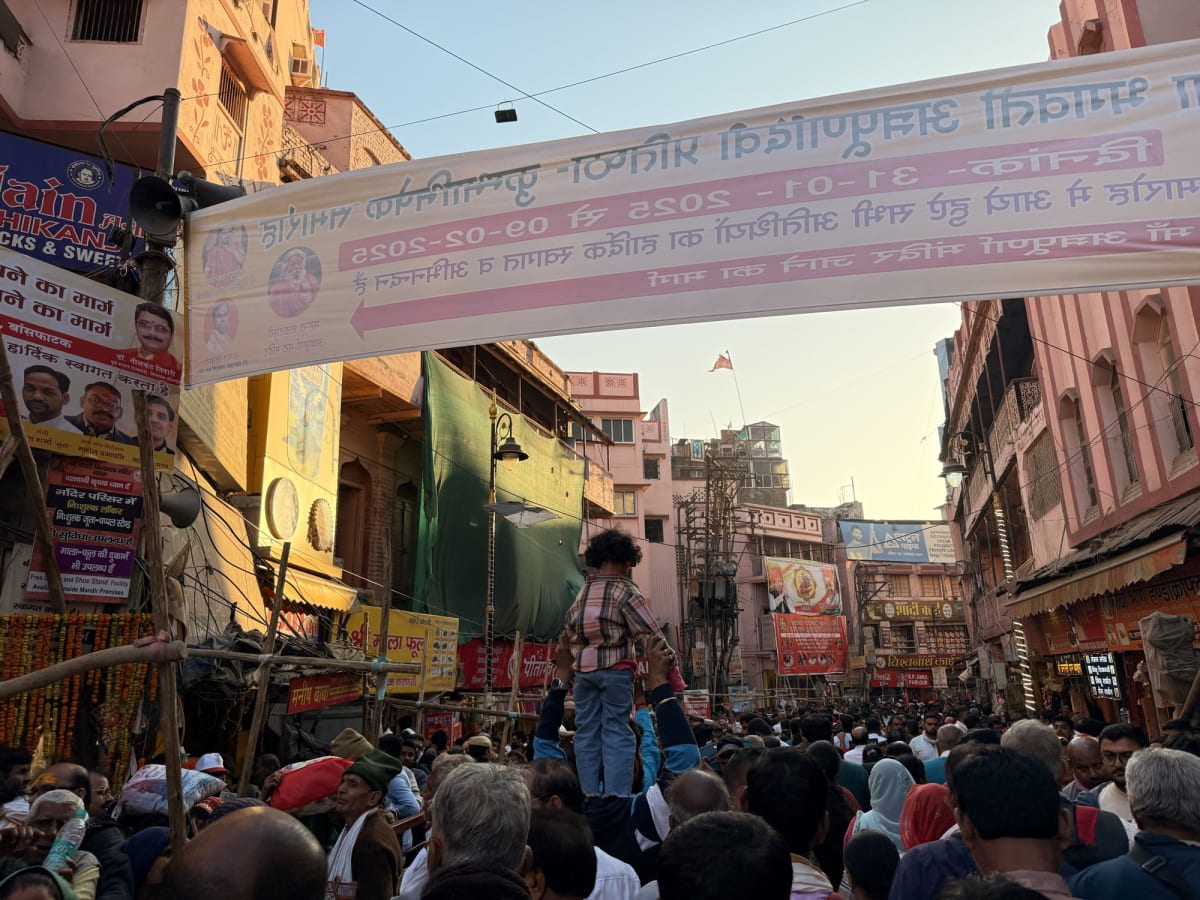
I set off toward a restaurant I had picked out earlier, to eat dinner.
Police were managing the road because of the long procession I'd walked into.
People trying to cross to opposite sides shoved at each other — it was bedlam.
When I simply handed my body over to them, I found myself carried forward before I knew it.
The charm of travelling in India is letting go — I was coming to understand that.
In Korea a shove from behind would have set me off, but India is different.
You just flow along the way things flow.
You have to give up a little on people being treated as people — myself included.
Even in the middle of it, one father went along with his child up on his shoulders, as though playing with him. That stayed with me.
You could call it the ease of an Indian who has let go and adjusted.
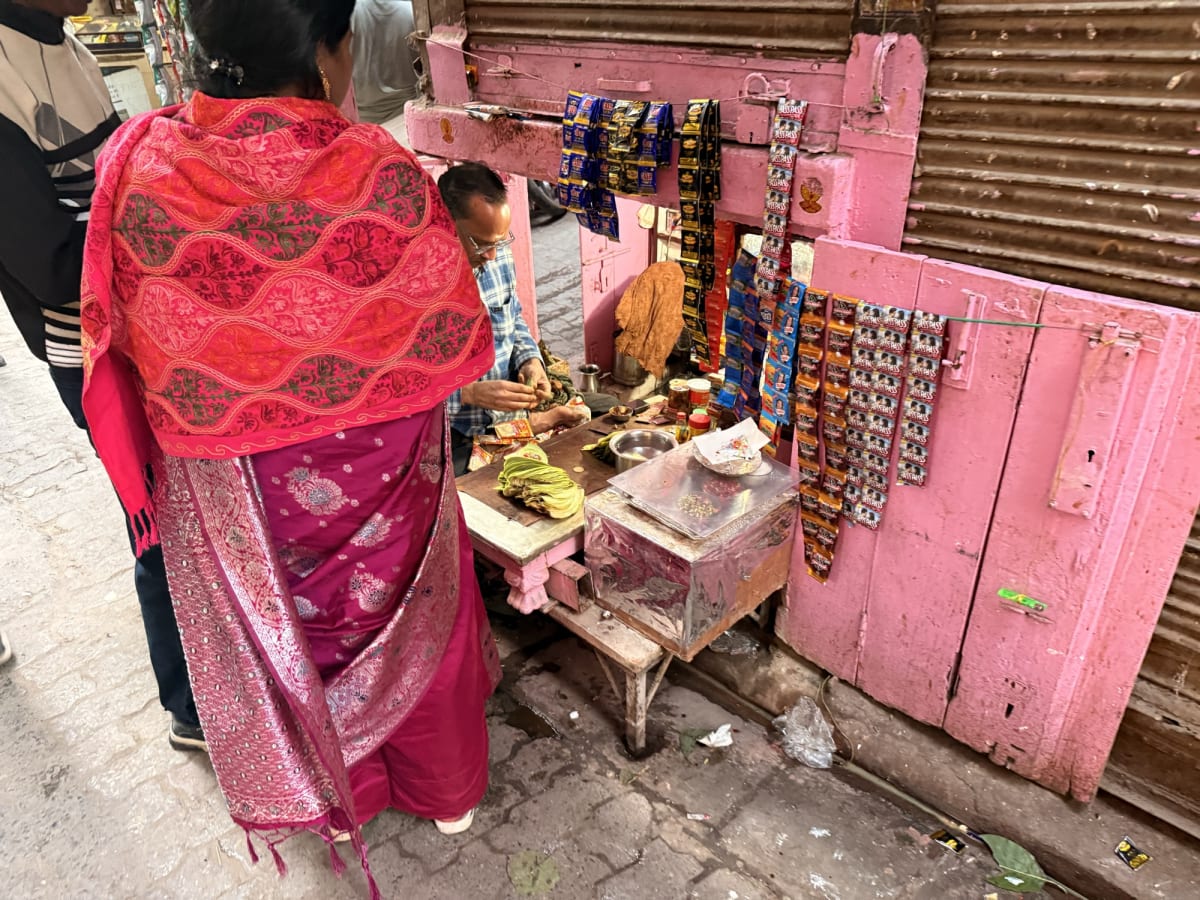
In the alley there was also someone making the chew that wraps various ingredients in something like a perilla leaf.
I think I saw it on a TV programme about travelling in Southeast Asia, and I think they said it was hallucinogenic.
Looking it up again, it is a chewing tobacco called betel nut.
As they see it, they chew it for oral hygiene.
But it is a Group 1 carcinogen, and they say it rots your teeth right out.
I like looking after my health and neither drink nor smoke, so I couldn't even bring myself to try it.
The Walk to the Restaurant, and the Street


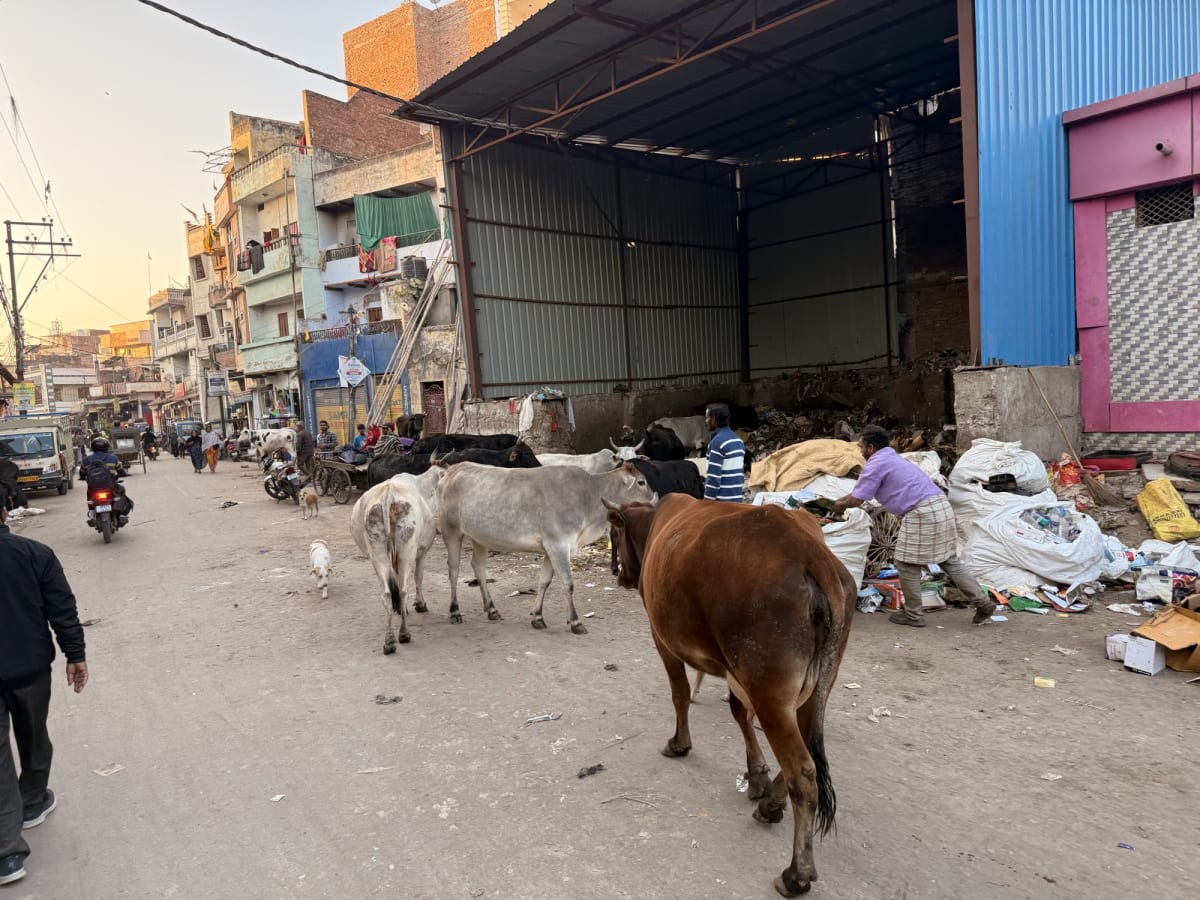
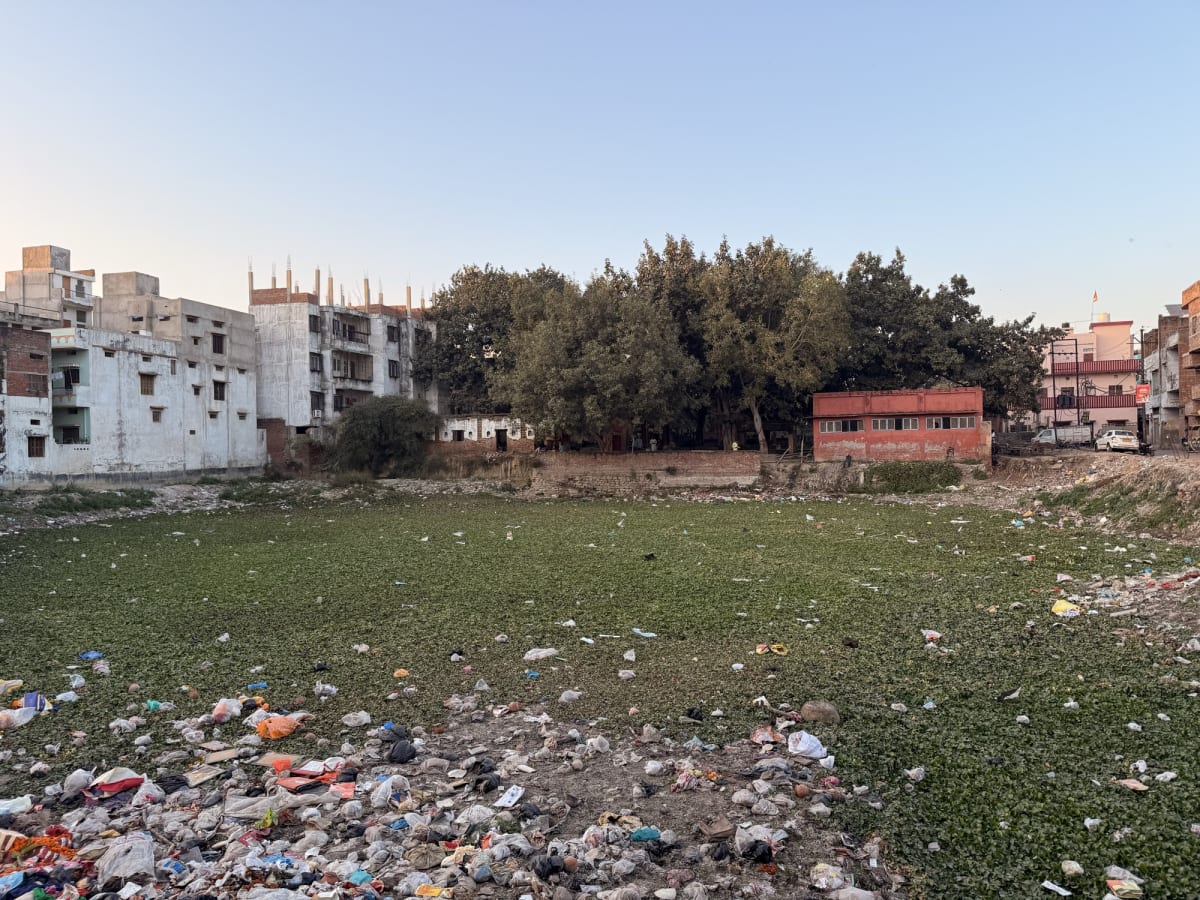
Once I had walked a little way out of the crush, plenty of unhurried alley scenes came into view.
Plenty of street dogs, plenty of cows, and far more rubbish than either.
The buildings are all worn out, and with no proper open ground anywhere the children play barefoot in the lanes.
Even so they look untroubled, giggling among themselves, having fun.
This is what the streets of Varanasi look like.
In a sense, wherever you live, it comes down to how you set your mind.
Happiness isn't somewhere far away.
Waking out of the sentimental thought, I also wonder whether not knowing is a condition of that ease.
Meet something new, let your palate turn expensive, and dissatisfaction with your life usually follows.
You may come to despair at the inequality.
Looking at the children's laughter, I hope that never happens to them.